
If your team's uniforms are becoming a source of odour and discomfort before the first half of a shift is even over, are they actually fit for a 2026 clinical environment? Most procurement leads understand the frustration of seeing professional apparel succumb to stubborn stains and persistent bacteria, leading to a costly and frequent turnover of kit. Integrating antimicrobial fabric for healthcare uniforms isn't just about following a trend. It's a strategic move to lower the bio-burden on garments while ensuring staff stay fresh and focused during demanding shifts.
We agree that balancing strict infection control with the daily comfort of your workforce is a constant challenge, especially as we navigate the latest national standards. This guide will show you how advanced textile innovations can transform your uniform strategy, offering superior durability and breathability. We'll examine the impact of new regulations like ISO 9348:2026 and explain how to select garments that remain compliant, professional, and comfortable through every essential 60°C wash cycle.
Key Takeaways
- Understand the role of silver ion and zinc technologies in disrupting pathogen metabolism for enhanced clinical hygiene.
- Learn how antimicrobial fabric for healthcare uniforms improves ROI by extending garment longevity and reducing replacement frequency.
- Balance fabric GSM and breathability to meet UK safety standards while ensuring comfort in high-pressure medical roles.
- Maintain a professional identity with bio-active textiles that actively neutralise odours and repel organic fluids throughout a shift.
- Execute a seamless rollout by conducting site-wide performance audits and trialling samples with frontline clinical staff.
What is Antimicrobial Fabric for Healthcare Uniforms?
Antimicrobial fabric for healthcare uniforms refers to textiles integrated with active agents designed to inhibit the growth of microorganisms. While standard 65/35 polyester-cotton blends have served the UK healthcare sector for decades, the shift toward bio-active textiles reflects a more rigorous approach to clinical hygiene. These fabrics don't just provide a professional appearance. They actively work to reduce the bio-burden on the garment surface between laundry cycles. This is a critical distinction in high-traffic wards. While an antibacterial treatment specifically targets bacteria, an antimicrobial solution offers broader protection against fungi, mould, and certain viruses.
The evolution of these materials has been driven by the need for better infection prevention and control (IPC) measures. In the past, uniforms were passive barriers. Today, they're functional tools. By inhibiting microbial growth, these textiles help prevent the fabric from becoming a reservoir for pathogens. This is particularly relevant given the "Bare Below the Elbows" policy, which focuses on hand hygiene but leaves the remaining garment surface exposed to the clinical environment. Using antimicrobial fabric for healthcare uniforms ensures that the attire itself isn't contributing to cross-contamination risks during a busy shift.
Topical Treatments vs. Inherent Fibre Technology
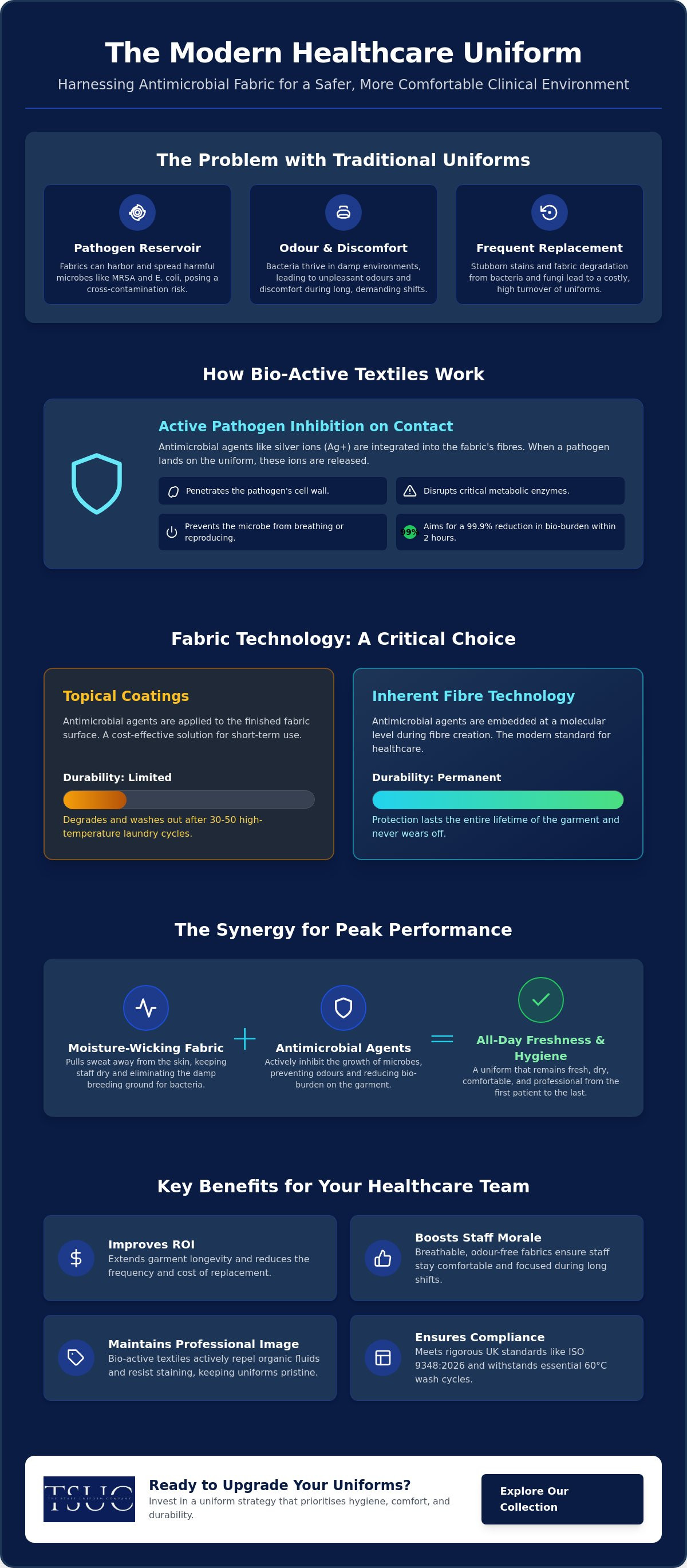
Procurement teams usually choose between topical treatments and inherent fibre technology. Topical coatings are applied to the finished fabric surface. They're cost-effective for short-term projects but often degrade after 30 to 50 washes. By contrast, inherent technology involves embedding antimicrobial agents at the molecular level during the fibre extrusion process. The protection is permanent. It won't wash out or wear off, even with the frequent 60°C laundering required by UK health standards. In 2026, the industry has pivoted toward inherent fibres. They offer a much higher return on investment for long-term staff contracts because the efficacy lasts for the entire life of the garment.
The Role of Moisture-Wicking Properties
Bacteria thrive in damp, warm environments, which makes moisture management a vital partner to antimicrobial agents. Modern medical scrubs and nurse dresses now utilise quick-dry synthetic blends that pull sweat away from the skin. This synergy is essential. By keeping the fabric dry, you remove the primary breeding ground for pathogens. It also has a direct impact on staff morale. Clinicians working 12-hour shifts in climate-controlled wards need apparel that stays light and breathable. When moisture-wicking properties are combined with antimicrobial fabric for healthcare uniforms, the result is a garment that remains fresh, dry, and professional from the first patient to the last.
The Science of Bio-Active Textiles: How It Works
The efficacy of antimicrobial fabric for healthcare uniforms relies on sophisticated molecular chemistry rather than simple surface coatings. Silver ion technology is the most prevalent method used in 2026. When pathogens land on the fabric, silver ions are released to penetrate the cell wall of the microorganism. These ions disrupt the metabolic enzymes of the pathogen, effectively preventing it from breathing, feeding, or reproducing. This process occurs on contact, ensuring that the garment surface remains an inhospitable environment for microbes throughout a long shift. Because the silver is often integrated into the fibre itself, the protection doesn't leach out during the high-temperature laundry cycles required for clinical attire.
While silver is a leading choice, other agents like Zinc Pyrithione and Quaternary Ammonium offer alternative broad-spectrum protection. Zinc-based treatments are particularly effective at inhibiting the growth of fungi and mould, which can otherwise degrade fabric integrity over time. Quaternary Ammonium compounds create a "positively charged" surface that physically ruptures the negatively charged membranes of bacteria. These technologies are highly effective against common hospital-acquired infections (HAIs) such as MRSA and E. coli. By maintaining an active "contact kill" mechanism, these textiles provide a continuous layer of defence that passive fabrics simply cannot match.
Pathogen Inhibition and Cross-Contamination
Uniforms often act as unintended vectors for pathogens as staff move between patient rooms and communal areas. A CDC study on antimicrobial textiles demonstrates how active fabric treatments can significantly reduce the survival rate of bacteria on soft surfaces. Bio-burden reduction aims for a 99.9% decrease in viable microorganisms on the fabric surface within two hours of exposure. It's vital to remember that while these textiles are powerful, they're a supplement to, not a replacement for, rigorous hand hygiene and standard PPE protocols. When selecting Medical Scrubs & Healthcare Uniforms, understanding these scientific safeguards helps you build a more robust infection control strategy.
Odour Control and Bacterial Degradation
Odour in healthcare settings is frequently the result of bacterial waste products as they consume sweat and skin cells trapped in fabric fibres. Antimicrobial technology neutralises these odour-causing bacteria at the source. This prevents the permanent "staling" of garments, a common issue where uniforms retain a faint scent even after being laundered. By inhibiting bacterial degradation, the fabric remains fresh and maintains its structural strength for longer. This has a direct psychological impact on staff. Clinicians who feel their uniform is fresh and clean maintain a higher level of professional confidence during patient-facing roles, which ultimately enhances the internal morale of the entire ward.
Performance Benefits: Durability, Odour Control, and ROI
Investing in antimicrobial fabric for healthcare uniforms provides more than just a hygiene barrier; it significantly impacts your bottom line. Standard uniforms often fail not because they've torn, but because they've become "stale." Bacterial growth within the fibres leads to persistent odours that standard laundry cycles eventually fail to remove. By inhibiting this microbial colonisation, antimicrobial textiles maintain their freshness for much longer. This prevents the premature disposal of garments, effectively extending the lifecycle of your inventory. Additionally, many modern antimicrobial treatments provide enhanced stain resistance. They often repel organic fluids on contact, making it easier to maintain a spotless appearance in high-pressure clinical settings.
A simple cost-per-wear analysis reveals the true value of high-performance kit. While a standard scrub set might cost £15, it often requires replacement within six months due to odour retention or fabric thinning. In contrast, a £30 set made from advanced scrubs uk technology can easily last 12 to 18 months while remaining in peak condition. When you factor in the administrative costs of frequent re-ordering and the logistics of distribution, the higher initial investment in antimicrobial fabric for healthcare uniforms becomes the more economical choice for any trust or private clinic.
Calculating the Return on Investment
Procurement leads must look beyond the unit price to see the hidden costs of low-quality apparel. Standard fabrics that retain odours create a negative professional environment and can lead to a higher turnover of kit. By switching to high-durability antimicrobial blends, you can reduce the frequency of replacement cycles significantly. This stability reduces the administrative burden on facility managers, allowing them to focus on service delivery rather than constant uniform procurement and inventory management. Choosing quality over quantity ensures your budget is spent on assets that last.
Staff Morale and Professional Presentation
The psychological impact of professional attire shouldn't be underestimated. Wearing technology that's perceived as "protective" provides staff with an added layer of confidence when navigating high-traffic wards. High-quality antimicrobial fabrics are engineered to be lightweight and moisture-wicking, which helps reduce "scrub fatigue" during 12-hour shifts. Staff can maintain a crisp, professional appearance from their first patient until they clock out. This consistency doesn't just improve internal morale; it enhances the external perception of your business by patients and visitors who value a clean, efficient image.
Procurement Criteria: Selecting Fabrics for UK Healthcare
Selecting antimicrobial fabric for healthcare uniforms requires more than just checking a tick-box for hygiene. In the UK, procurement must align with strict NHS and private healthcare regulations. The primary benchmark is ensuring the textile can withstand rigorous thermal disinfection. According to current standards, garments must survive a 60°C wash for at least 10 minutes to effectively remove pathogens like MRSA. If an antimicrobial treatment degrades after a few cycles, the initial investment is wasted. You need to verify the "wash-count" rating of any potential fabric. High-quality inherent fibre technologies are often rated for 100+ washes, maintaining efficacy long after topical coatings have failed.
Breathability is another critical factor. We measure this through GSM (grams per square metre). A higher GSM often provides better fluid resistance but can lead to heat stress during long shifts. For ward-based roles, a mid-range GSM of 175 to 195 is usually the sweet spot. It balances durability with the airflow needed for comfort. For more technical advice on choosing the right specifications, consult our custom staff uniforms uk guide. Finding this balance ensures your team remains compliant without compromising their daily performance.
Industrial Washing and Thermal Disinfection
UK healthcare laundry protocols are notoriously tough on textiles. Antimicrobial fabrics must be engineered to handle industrial washing without losing their protective properties or colourfastness. It's not just about the antimicrobial agent; the base fabric must be high-grade 65/35 polyester-cotton or advanced synthetic blends that won't shrink or pill at 60°C. Look for fabrics that have been tested against BS EN standards for dimensional stability. This ensures your team stays looking professional and the garments remain functional through months of heavy-duty cleaning. High-temperature cycles shouldn't mean a high turnover of kit.
Fabric Blends for Specific Roles
Different clinical environments demand different fabric properties. Medical Scrubs & Healthcare Uniforms for surgical teams often require higher synthetic content. This provides better fluid repellency and protects against splashes. For frontline nursing staff, cotton-rich antimicrobial blends are often preferred. These offer superior breathability and a softer handle, which is vital for movement and patient interaction. Lab coats, meanwhile, must balance chemical resistance with antimicrobial protection. By tailoring the fabric blend to the specific role, you ensure that the uniform is a tool for success rather than a hindrance.
Ready to upgrade your team's kit? Explore our full range of Medical Scrubs & Healthcare Uniforms to find the perfect fit for your clinic.
Implementing Antimicrobial Uniforms for Your Team
Transitioning to a high-performance uniform standard requires a methodical approach to ensure both clinical compliance and staff buy-in. It's not just a purchase; it's a strategic upgrade to your facility's infection control toolkit. The process should begin with a site-wide audit. Identify the specific pain points in your current inventory, such as uniforms being discarded early due to persistent odours or fabric degradation. Understanding these failure points allows you to choose the right antimicrobial fabric for healthcare uniforms that directly addresses your facility's needs.
Once you've identified the requirements, trial antimicrobial samples with a small focus group of frontline staff. Clinicians working 12-hour shifts are the best judges of breathability and movement. Their feedback ensures that the chosen garments won't just look professional but will perform under pressure. Following a successful trial, partner with a specialist UK supplier who understands the clinical nuances of the sector. Finally, educate your team on proper garment care. While inherent technology is durable, staff must still follow standard thermal disinfection protocols to maintain the highest levels of hygiene and maximise the garment's lifespan.
The Psychological Impact on Patient Trust
There's a significant psychological benefit to implementing high-tech apparel that shouldn't be overlooked. Patients in 2026 are more health-literate than ever and pay close attention to hygiene standards. Seeing a clinical team in crisp, technologically advanced uniforms builds immediate trust. It signals that your facility prioritises every detail of safety, from hand hygiene to the very fibres of the staff's clothing. This visible commitment to excellence can reduce patient anxiety and enhance their overall perception of the care they receive. A professional image isn't just about aesthetics; it's a vital tool for building confidence in your services.
The Staff Uniform Company Approach
At The Staff Uniform Company, we provide strategic identity solutions rather than just off-the-shelf kit. We're committed to sourcing the latest textile innovations, ensuring your team has access to the most effective antimicrobial fabric for healthcare uniforms on the market. Our approach balances technical performance with professional branding. We manage the entire process, ensuring that custom embroidery and logo integration are handled with precision so they don't compromise the fabric's integrity. Whether you manage a private clinic or a large-scale medical facility, we offer bespoke procurement models designed for efficiency and consistency.
Next Steps for Your Facility
Ready to upgrade your team's professional image? We recommend requesting fabric swatches and technical data sheets to evaluate the quality and performance of our textiles first-hand. Our experts are available to consult on custom branding and logo integration to ensure your team's identity is handled with expertise. Take a proactive step toward a more durable and hygienic workforce today. View our professional healthcare range to explore the full selection of scrubs, nurse dresses, and tunics available for your facility.
Future-Proofing Your Clinical Uniform Strategy
Adopting antimicrobial fabric for healthcare uniforms is no longer a luxury; it's a strategic necessity for the 2026 clinical environment. By integrating bio-active textiles into your procurement plan, you're investing in a dual-purpose tool that strengthens infection control while significantly reducing long-term costs. These advanced materials don't just repel pathogens; they actively maintain garment integrity and freshness through the toughest industrial laundry cycles. This shift ensures your team remains comfortable and confident, even during the most demanding 12-hour shifts.
Since 2017, we've established ourselves as a trusted UK supplier and a specialist in clinical-grade medical scrubs. Our expertise in industrial-wash durable textiles means we understand the specific pressures of the healthcare sector. We're here to guide you through every step of the transition, from initial fabric audits to final delivery. Upgrade your healthcare team with our advanced antimicrobial range and experience the difference that expert-led procurement makes. We look forward to helping you enhance your facility's professional image and safety standards.
Frequently Asked Questions
What is the main difference between antimicrobial and standard healthcare fabric?
Standard fabrics act as passive barriers that can harbour pathogens, while antimicrobial fabric for healthcare uniforms contains active agents that inhibit microbial growth on the surface. This technology prevents the garment from becoming a reservoir for bacteria between laundry cycles. It provides a functional layer of protection that standard poly-cotton blends simply cannot offer.
How many washes does the antimicrobial treatment actually last?
The lifespan depends on whether the treatment is topical or inherent. Inherent fibre technologies are designed to last for the entire life of the garment, often exceeding 100 washes. Topical coatings are less durable and typically begin to lose efficacy after 30 to 50 washes. Always verify the specific wash-count rating with your supplier before procurement.
Are antimicrobial fabrics safe for healthcare workers with sensitive skin?
Can antimicrobial uniforms be washed at high temperatures for infection control?
High-quality antimicrobial uniforms are specifically engineered to withstand the 60°C thermal disinfection cycles required by UK clinical standards. Inherent technologies are particularly resilient to these temperatures. They maintain their protective properties and structural integrity without shrinking or pilling during heavy-duty industrial washing.
Do antimicrobial scrubs protect the wearer from viruses like COVID-19?
Antimicrobial scrubs are not a substitute for personal protective equipment (PPE) and don't provide a direct shield against airborne viruses. Their primary role is reducing the bio-burden on the fabric surface itself. This helps prevent the uniform from acting as a vector for cross-contamination as staff move between different clinical areas.
Is it worth the extra cost to buy antimicrobial uniforms for my clinic?
The initial investment is higher, but the return on investment is superior due to extended garment longevity. Antimicrobial fabric for healthcare uniforms resists the bacterial degradation that causes standard kits to become stale and odorous. You'll likely see a significant reduction in the frequency of replacement cycles and the administrative costs associated with frequent re-ordering.
Do antimicrobial fabrics require special detergents or softeners?
These fabrics don't require special detergents, but you should avoid using fabric softeners or chlorine bleach. Softeners can coat the fibres and mask the antimicrobial agents, while bleach may degrade certain silver or zinc treatments over time. Standard industrial laundry detergents are usually perfectly compatible and effective.
How do antimicrobial textiles help with odour control during long shifts?
Odour control works by neutralising the bacteria that break down sweat and skin cells into odorous compounds. By preventing this bacterial colonisation, the fabric remains fresh throughout a demanding 12-hour shift. This is a practical solution that improves staff confidence and maintains a professional image in patient-facing environments.