
A hairdressing apprentice's uniform is more than just a dress code; it's the first line of defense against chemical spills and the primary tool for building client trust. It's frustrating to watch a new hire's professional image dissolve as their clothes are ruined by hair dye or when they struggle through a long shift in restrictive, uncomfortable garments. You need a team that looks like experts from their very first hour on the floor, yet the practical demands of a busy salon often make maintaining that standard feel difficult.
This 2026 guide will help you master the essentials of a high-performance hairdressing apprentices uniform that balances durability with sharp, professional branding. We'll explore the latest technical fabrics designed to repel hair and resist bleach, ensuring your staff stays comfortable during eight-hour shifts. You'll also learn how cohesive styling and custom embroidery can transform your apprentices into confident brand ambassadors while protecting your investment in their professional development.
Key Takeaways
- Understand how a professional hairdressing apprentices uniform builds immediate client trust and boosts the confidence of your newest team members.
- Evaluate the "Big Three" salon garments to determine why the traditional beauty tunic remains the superior choice for technical hair and beauty environments.
- Identify the specific fabric blends and hair-repellent finishes required to protect staff from chemical damage and skin irritation.
- Discover the strategic benefits of logo embroidery for creating a cohesive brand identity that lasts through high-frequency salon wash cycles.
- Learn how to calculate the long-term value of your workwear procurement to ensure durability across the entire lifecycle of an apprenticeship.
What Defines a Professional Hairdressing Apprentice Uniform in 2026?
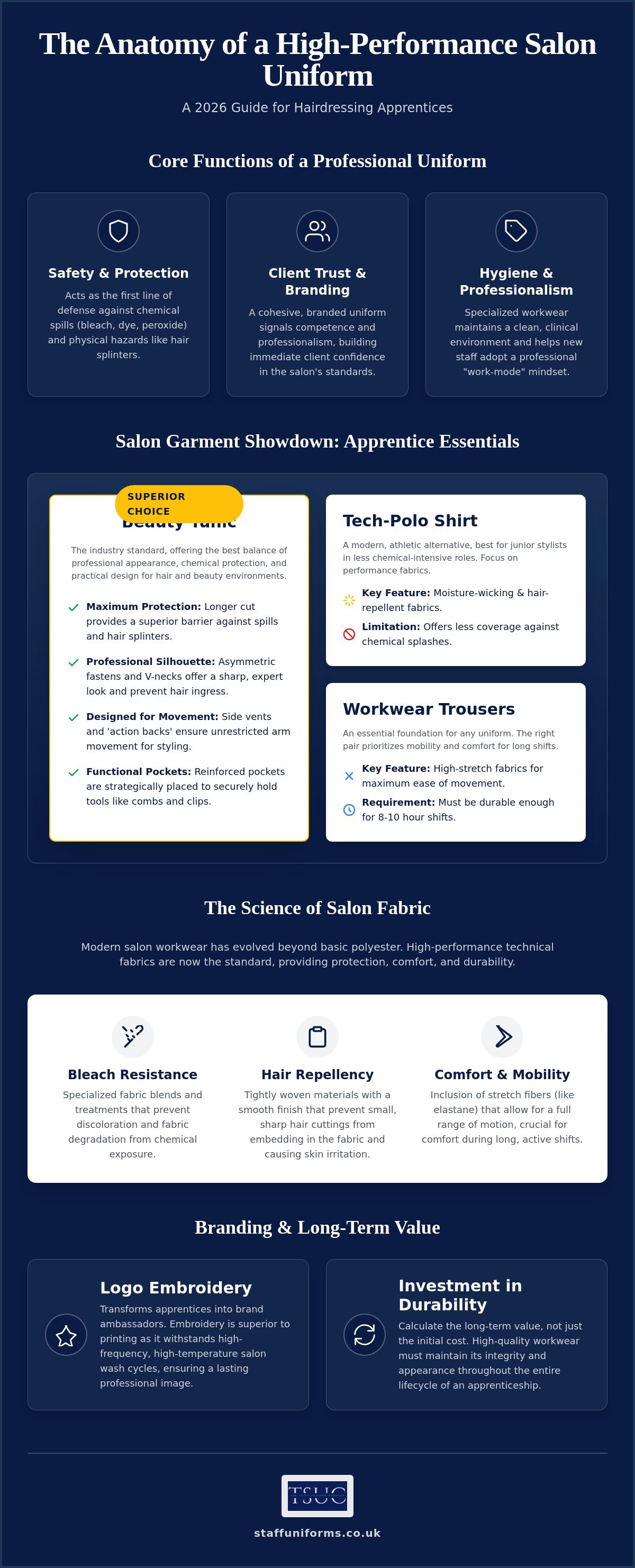
A professional hairdressing apprentices uniform is a specialized kit designed to meet the rigorous demands of a clinical yet creative environment. It serves three core purposes: ensuring hygiene, providing physical safety, and acting as a visual extension of the salon's brand. While college courses often suggest a basic black set, modern commercial standards require garments that withstand chemical exposure while maintaining a sharp, expert silhouette. The role of uniforms in the workplace has evolved significantly, moving beyond simple identification to become a critical component of professional risk management and team cohesion.
A standard kit typically includes several essential components that balance form and function:
- Beauty Tunics: The core of the uniform, providing a professional silhouette and essential chemical protection.
- Workwear Trousers: Specifically designed with stretch fabrics for ease of movement during long shifts.
- Hospitality Aprons: An extra layer of protection used during high-risk color applications to prevent fabric damage.
These items must comply with the Health and Safety at Work Act 1974. This legislation mandates that employers ensure all workwear is safe and doesn't pose a risk to employees or clients, especially when handling hazardous substances like bleach and peroxide.
The Evolution of Salon Workwear Standards
The days of simple, low-cost polyester are gone. In 2026, the focus has shifted toward high-performance apparel that moves with the stylist. We're seeing a significant rise in inclusive, gender-neutral designs that allow every team member to feel comfortable and represented. Modern salons now balance runway-inspired aesthetics with technical requirements like hair-repellent finishes. It's about looking current without sacrificing the durability needed for a ten-hour Saturday shift.
First Impressions: Why Apprentices Need Professional Gear
Clients paying premium prices for color services expect expertise at every touchpoint. When an apprentice approaches the backwash in a coordinated, branded uniform, it signals competence and attention to detail. It helps distinguish between junior and senior staff through subtle design cues, like varied embroidery or tunic colors, while maintaining a unified brand image. Psychologically, putting on a professional hairdressing apprentices uniform helps new starters transition into a "work-mode" mindset. It builds the confidence they need to interact with clients and take pride in their technical progression. High-quality standards in attire improve internal morale and enhance external perceptions of the business, proving that your salon values its workforce from day one.
Choosing the Right Garments: Tunics, Trousers, and Beyond
Selecting the right hairdressing apprentices uniform requires a strategic balance between aesthetic appeal and mechanical performance. The "Big Three" garments — tunics, polo shirts, and trousers — form the foundation of any salon kit. While senior stylists might opt for more varied attire, apprentices need versatile gear that handles the learning curve of chemical application and constant movement. A well-structured cosmetology student dress code often emphasizes that attire must be both professional and practical to prevent workplace accidents and maintain hygiene. The traditional beauty tunic remains the industry standard because it provides a longer line of protection against spills and creates a reliable barrier against hair splinters.
For salons seeking a more contemporary look, the "Tech-Polo" has emerged as a viable alternative for junior stylists. These are not standard cotton shirts. They're moisture-wicking, hair-repellent garments that offer an athletic vibe without sacrificing the professional image of the business. Choosing between these options depends on your brand's specific identity and the daily tasks your apprentices perform.
The Salon Tunic: Style Meets Utility
Modern tunics feature diverse necklines, from classic V-necks to sophisticated asymmetric fastens. Asymmetric designs are particularly effective at preventing cut hair from falling down the collar. It's vital to prioritize side vents and action backs. These features allow for unrestricted arm movement when blow-drying or reaching for products. Pockets should be strategically placed and reinforced. They need to hold combs and clips securely without sagging or becoming traps for hair debris.
Workwear Trousers for Long Salon Shifts
Standing for eight hours is the reality of the job. Your team needs workwear trousers that offer 360-degree stretch. Look for technical fabrics that won't sag at the knees or lose their shape by midday. Breathability is essential in a warm salon environment filled with dryers. We recommend straight-leg or slim-fit options that provide a clean silhouette while accommodating various body types. Providing inclusive sizing ensures every apprentice feels confident and remains focused on their training rather than their clothing. Exploring high-quality beauty and spa tunics and trousers can help you build a kit that lasts an entire apprenticeship.
Protective Layers: The Professional Salon Apron
Aprons serve as the final shield during high-risk tasks. Full-coverage aprons are essential for backwash duties and color mixing where splashes are frequent. Look for waterproof and chemical-resistant coatings to ensure longevity. Ergonomic designs with adjustable cross-back straps are superior to halter-necks. They distribute weight across the shoulders, preventing the neck strain that often plagues busy stylists during long shifts.
The Science of Fabric: Bleach-Resistance and Hair-Repellency
Selecting the right material for a hairdressing apprentices uniform involves more than just picking a color. The technical performance of the textile determines whether a garment lasts a full year or needs replacing within weeks. While standard retail clothing or basic cotton-rich blends might seem cost-effective, they lack the specialized defenses required in a chemical-heavy salon. Cotton is highly absorbent, meaning a single drop of peroxide can create a permanent orange stain. In contrast, technical fabrics are engineered to solve the specific environmental challenges of the hair industry.
Most professional salon wear utilizes 100% polyester or high-polyester blends. Polyester is naturally more resilient than natural fibers. It holds its shape, resists shrinking, and maintains deep pigments through frequent high-temperature washes. This durability is essential for apprentices who are often tasked with the most physically demanding and messy roles, from deep-cleaning the backwash to mixing complex color formulas.
Bleach-Resistant vs. Bleach-Proof: What You Need to Know
There's a critical distinction between these two terms that every salon owner should understand. Bleach-proof items are often made of heavy, non-breathable plastics or rubbers, which are impractical for an eight-hour shift. Bleach-resistant fabrics, however, are treated with a specialized chemical finish that allows the fibers to repel oxidizing agents. Bleach-resistance is a specialized chemical treatment applied to fibers that prevents oxidizing agents from stripping away the garment's pigment, effectively extending the uniform's professional lifespan. This technology ensures that accidental splashes don't result in the patchy, unprofessional appearance that often plagues lower-quality gear. By using these advanced materials, salons can meet the UK's National Occupational Standards for professional presentation without constantly reinvesting in new stock.
Preventing Hair Splinters with Technical Weaves
Hair splinters, or trichalgia, are a significant source of discomfort for salon staff. Microscopic hair clippings can easily penetrate loosely woven fabrics, becoming trapped against the skin and causing painful irritation. Technical salon wear uses a high-density, tight-weave structure to create a physical barrier. When combined with an anti-static finish, these fabrics ensure that cut hair simply slides off the surface rather than clinging to the garment. It's a practical solution that keeps your team comfortable and looking sharp. These high-density weaves don't have to be heavy; modern manufacturing ensures they remain breathable and lightweight, even during the heat of a busy Saturday afternoon.
Apprentices also benefit from easy-care properties like non-iron finishes. Fabrics that are quick-dry and crease-resistant allow for a fast turnaround between shifts. It's a reliable, no-nonsense approach to workwear that respects the apprentice's time while maintaining the salon's high standards for excellence.
Branding Your Apprentice Team: Logo Embroidery and Identity
A salon's brand identity extends far beyond the signage on the high street. Every interaction between a client and a stylist is a marketing opportunity. When you invest in custom staff uniforms UK, you're turning your workforce into a cohesive visual representation of your business's standards. For a new starter, putting on a branded hairdressing apprentices uniform signals that they aren't just a student; they're a vital part of a professional team. This visual authority builds immediate trust with clients who may otherwise feel hesitant about being served by a junior staff member.
Choosing between embroidery and print is a critical decision for salon longevity. High-wash environments, typical in the hair industry, are notoriously tough on garments. While screen printing is often cheaper for large batches, it tends to crack and peel after repeated exposure to hot water and chemical detergents. Logo embroidery offers a far superior lifespan. It maintains its crisp edges and vibrant colors for years, ensuring your team looks professional until the day the garment is retired.
Strategic logo placement is equally important. During a consultation or a backwash service, the client's eyes are naturally drawn to the chest or upper sleeve of the stylist. Placing your logo in these high-visibility areas ensures constant brand reinforcement. It's a subtle yet effective way to remind the client they are in expert hands, regardless of which team member is assisting them.
The Power of Professional Logo Embroidery
Contrast is key when selecting thread colors. White or silver embroidery pops against classic black tunics, while gold or bronze tones add a luxury feel to navy or charcoal sets. Maintaining this brand consistency across tunics, aprons, and even softshell jackets for outdoor events is essential for a unified image. High-quality logo embroidery elevates the perceived value of a salon service by demonstrating a commitment to detail and professional excellence.
Standardising the Look Across the National Salon Chain
Managing a brand across multiple locations requires strict control over procurement. Centralising your orders ensures that an apprentice in London looks identical to one in Manchester. Implementing a clear "Uniform Policy" helps new starters understand the expectations for their appearance from day one. This standardisation prevents brand dilution and simplifies the onboarding process. For those looking to expand their salon's aesthetic, exploring beauty spa uniforms can provide broader inspiration for technical yet stylish workwear.
Establishing a strong identity doesn't have to be complex. You can order your branded salon uniforms today to ensure your team reflects the quality of your work. By providing a professional hairdressing apprentices uniform with high-quality embroidery, you foster a sense of belonging that encourages long-term staff retention and pride in the workplace.
Procurement and Maintenance: Ensuring Uniform Longevity
Procuring a hairdressing apprentices uniform is a strategic investment in your salon's operational efficiency. Smart business owners focus on the "Cost Per Wear" rather than the initial purchase price. A high-quality tunic might require a larger upfront spend, but if it survives 12 months of daily washes and chemical exposure, it's far more economical than a budget alternative that fails after eight weeks. Quality pays for itself through durability and the consistently expert image your team projects to every client.
Effective stock management is the foundation of a professional appearance. While some educational settings suggest a single set is sufficient, commercial reality dictates otherwise. We recommend a minimum of three full sets per apprentice. This creates a reliable rotation: one garment in use, one in the wash, and one ready for the next shift. This system prevents fabric fatigue and ensures that your newest team members never have to choose between a damp uniform or a stained one.
Sizing and fitting are equally critical for performance. Apprentices perform a wide range of physical tasks, from sweeping floors to assisted blow-drying. Ill-fitting clothes are a distraction that can hinder their technical progress. Providing a clear sizing guide during the onboarding process ensures they feel comfortable and confident from their first hour on the floor. It's a practical step that demonstrates your commitment to their professional development and wellbeing; for those looking ahead, WorkReferences can also assist in documenting this valuable work experience for future career milestones.
Laundering for Longevity
Maintaining technical salon fabrics requires a disciplined approach to laundry. Wash garments at 40°C to effectively remove hair oils, styling products, and dye residues without compromising the integrity of the synthetic fibers. It's vital to follow the "No Fabric Softener" rule. These products coat the technical weave, destroying the hair-repellent properties and anti-static finishes that keep your team comfortable. Always hang tunics to dry or use a low-heat tumble setting to maintain that crisp, professional look without the need for intensive ironing.
Ordering for the Team: Bulk Discounts and Sizing
Managing a diverse intake of apprentices requires logistical foresight. When ordering for multiple locations or large groups, look for suppliers that offer bulk discounts to maximize your procurement budget. We also suggest holding a small "buffer stock" of around 10% in common sizes. This allows you to kit out new starters immediately and handle emergency replacements without waiting for shipping cycles. Ready to kit out your team? Explore our professional salon range to find durable, high-performance gear that stands up to the rigors of 2026 salon life.
Elevating Your Salon Standards for 2026
Mastering the requirements of a hairdressing apprentices uniform is a strategic move that protects your brand and your bottom line. By prioritizing technical, bleach-resistant fabrics and ergonomic designs, you ensure your team remains comfortable and professional throughout the most demanding shifts. These choices don't just solve the practical problems of hair splinters and chemical stains; they foster a culture of pride and excellence from the very start of an apprenticeship.
As a trusted UK supplier since 2017, we specialize in high-performance workwear designed to withstand the unique pressures of the salon environment. Our professional in-house logo embroidery service allows you to maintain brand consistency across your entire team with precision and durability. It's time to move beyond basic kit lists and invest in apparel that truly reflects your salon's expertise and commitment to quality.
Browse our Professional Beauty & Salon Uniform Collection today and equip your team for long-term success. Your apprentices are the future of your business. Give them the professional foundation they deserve to grow into the senior stylists of tomorrow.
Frequently Asked Questions
What is the best fabric for a hairdressing apprentice uniform?
Technical 100% polyester or high-polyester blends are the superior choices for a professional hairdressing apprentices uniform. These materials offer the highest level of bleach resistance and color retention compared to natural fibers like cotton. High-density technical weaves also incorporate a hair-repellent finish, which prevents microscopic clippings from penetrating the fabric and causing skin irritation during long shifts.
How many uniforms should a hairdressing apprentice have?
We recommend that every apprentice has a minimum of three complete sets of workwear. This allows for a practical rotation where one set is worn, one is being laundered, and one is clean and ready for the next day. Having three sets prevents the premature wear caused by daily washing and ensures your team always presents a sharp, professional image to your clients.
Are salon tunics bleach-proof?
Most professional tunics are bleach-resistant rather than entirely bleach-proof. They're treated with specialized finishes to repel oxidizing agents and prevent immediate staining from accidental splashes during color mixing. However, prolonged exposure to concentrated chemicals can still damage the fibers. It's vital to rinse any spills immediately to maintain the garment's professional appearance and long-term durability.
Can I get my salon logo embroidered on apprentice tunics?
Yes, adding a salon logo to a hairdressing apprentices uniform is a highly effective way to build brand identity and team cohesion. In-house embroidery is the preferred method for branding because it withstands high-frequency washing much better than vinyl printing. This strategic addition helps new starters feel like a valued part of the professional team while reinforcing your brand to every client.
What shoes should a hairdressing apprentice wear with their uniform?
Apprentices should wear closed-toe, non-slip shoes with significant cushioning and arch support. Proper footwear is a safety requirement to prevent slips on wet salon floors or injuries from dropped tools. Look for styles specifically designed for the healthcare or hospitality sectors. These are engineered to provide the comfort needed for eight-hour standing shifts while meeting workplace safety standards.
How do I remove hair dye stains from a salon uniform?
Treat hair dye stains immediately by rinsing the affected area with cold water before the pigment dries. Don't use hot water or a tumble dryer until the stain is completely removed, as heat can permanently set the dye into the fabric fibers. Technical salon fabrics are designed to be less absorbent than standard clothing, which makes it much easier to lift stains if you act quickly.
Is there a difference between beauty tunics and hairdressing tunics?
The primary difference lies in the fabric specifications rather than the silhouette. While beauty tunics focus on a clean, clinical aesthetic, hairdressing versions must prioritize bleach-resistant technology and a tight weave to block hair splinters. Always verify that the garment is specifically rated for salon use to ensure it can handle the chemical demands of a professional hair environment.
Do apprentices have to pay for their own uniforms in the UK?
UK law states that if an employer requires a specific uniform, the cost must not bring the apprentice's pay below the National Minimum Wage. Many salon owners provide the initial hairdressing apprentices uniform as part of their standard onboarding process. This ensures brand consistency across the team and demonstrates a genuine interest in the professional image and safety of the new workforce.