
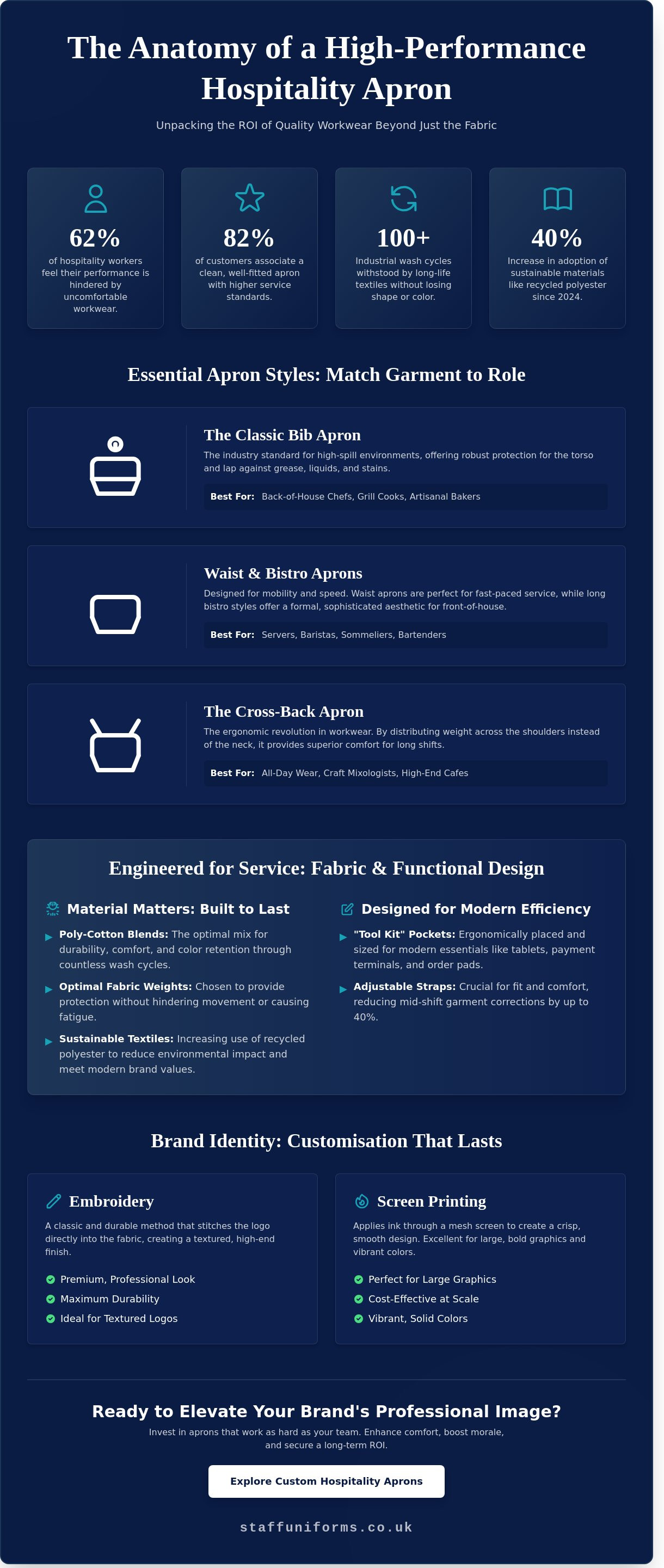
Why would a business spend 30% more on a single garment just to save thousands of dollars over the next two years? It sounds counterintuitive until you calculate the hidden cost of "cheap" hospitality aprons that fail after a dozen shifts. You already know that a first impression is formed in under seven seconds. If your team's uniforms look faded or ill-fitting, your brand's premium reputation suffers immediately. A 2023 industry survey revealed that 62% of hospitality workers feel their daily performance is hindered by uncomfortable workwear.
Discover how to select the perfect hospitality aprons that balance professional branding with the rigorous demands of modern service environments. We'll show you how to improve staff morale through ergonomic design while securing a long-term ROI. This guide provides a clear roadmap through the latest 2026 fabric technologies, bespoke branding options, and the durability standards required to withstand 50 or more industrial wash cycles without losing color or shape.
Key Takeaways
- Match apron styles to specific service roles to ensure your team’s attire balances professional presentation with the physical demands of the shift.
- Select the optimal fabric weights and poly-cotton blends for your hospitality aprons to guarantee long-term durability in high-pressure environments.
- Improve staff efficiency by implementing ergonomic "tool kit" pocket designs tailored for modern essentials like tablets, order pads, and payment terminals.
- Execute a high-impact branding strategy by choosing between embroidery and screen printing to maintain a crisp, professional logo through industrial wash cycles.
The Evolving Role of Hospitality Aprons in 2026
In 2026, hospitality aprons have moved far beyond their traditional roots as simple protective layers. They now function as a sophisticated hybrid tool, balancing physical durability with brand storytelling. While the history and styles of aprons trace back to functional necessity, modern hospitality demands more. Today, an apron serves as a mobile canvas for your business identity. It bridges the gap between back-of-house intensity and front-of-house elegance. By 2026, the market has shifted from generic, mass-produced kitchen wear to sector-specific professional attire designed for niche roles like craft mixologists or artisanal bakers.
Choosing the right garment directly impacts how your team feels and how your guests react. A 2025 hospitality industry survey indicated that 82% of customers associate a clean, well-fitted apron with higher service standards. This isn't just about aesthetics; it's about staff confidence. When employees wear gear that fits well and looks intentional, their performance improves. Sustainability is the dominant force in 2026 fabric selection. We're seeing a 40% increase in the adoption of recycled polyester and long-life textiles that withstand 100+ industrial wash cycles without losing shape or color. This focus on longevity reduces waste and ensures a consistent look for your brand over several seasons.
Beyond Protection: The Branding Power of Aprons
An apron allows you to anchor your visual identity without the expense of a full uniform overhaul. It's a high-impact solution for brand consistency. The psychology of color plays a vital role here. Darker tones like forest green or charcoal suggest stability and expertise, while lighter linens evoke a sense of transparency and freshness. For businesses looking to scale, consulting our hospitality workwear suppliers guide provides the necessary framework for large-scale procurement and brand alignment.
Key Trends Shaping Hospitality Workwear
The "Industrial Chic" aesthetic remains a powerhouse in 2026. This style utilizes heavy-duty denim and genuine leather accents to create a rugged, trustworthy appearance. Conversely, high-end fine dining venues are moving toward minimalist designs that use hidden pockets and sleek, monochromatic palettes. Functional branding in hospitality garments is the strategic integration of brand elements into the physical utility of the apron, such as custom-colored reinforced stitching or logo-embossed hardware that serves as both a fastener and a brand marker.
Essential Apron Styles: From Bib to Bistro
Selecting the right hospitality aprons isn't just about aesthetics; it's a functional decision that impacts staff performance and customer perception. The architecture of the garment determines the level of protection a worker has and how they move through a 10-hour shift. A well-chosen style influences the "vibe" of your establishment, shifting the atmosphere from industrial and rugged to refined and formal with a simple change in silhouette.
Matching apron height and width to the physical demands of a role is vital. A barista needs width for side-to-side movement, while a grill chef requires height for torso protection. Adjustable features are no longer optional for a diverse workforce. Straps that accommodate different heights and builds ensure your team looks uniform while remaining comfortable during high-pressure service windows.
The Classic Bib Apron: Full Coverage Versatility
Bib aprons remain the industry standard for high-spill environments. They cover the torso and lap, providing a robust shield against grease, hot liquids, and flour. For back-of-house teams, these integrate seamlessly with chef jackets to maintain a hygienic barrier. When selecting bib designs, choose adjustable-buckle systems over fixed-neck loops. Data from 2024 workplace surveys suggests that adjustable straps reduce mid-shift garment corrections by 40%, ensuring the apron stays centered during peak hours.
Waist and Bistro Aprons: Speed and Sophistication
Waist aprons prioritize mobility and speed. They're the preferred choice for fast-paced cafe environments and bar service where staff frequently bend, reach, and pivot. The long bistro apron offers a different advantage, creating a formal aesthetic for front-of-house teams. These styles are essential components of modern server uniforms in high-end venues. A bistro apron creates a clean, vertical line that communicates professional authority without the bulk of a full bib, making it ideal for table-side service.
Cross-Back Designs: The Ergonomic Revolution
Neck strain is a frequent complaint for staff working shifts exceeding 8 hours in heavy canvas or leather. Cross-back designs solve this by distributing the weight across the shoulders instead of the cervical spine. This ergonomic shift is a critical upgrade for craft bartenders or butchers who carry heavy tools, tablets, or thermal printers in their pockets. By 2026, ergonomic considerations are expected to be a top procurement priority for 75% of hospitality managers looking to improve staff retention and physical well-being.
Choosing the correct style ensures your hospitality aprons work as hard as your team does. If you need help determining which architecture best fits your specific operational needs, you can browse our professional range to see these styles in action.
Material Matters: Choosing Fabrics for Longevity
The poly-cotton blend remains the industry standard for hospitality aprons. A composition of 65% polyester and 35% cotton creates a fabric that withstands 50+ industrial wash cycles without losing its structural integrity. Polyester provides the necessary tension to prevent sagging, while cotton ensures the wearer stays comfortable during a high-pressure shift. This blend dries 40% faster than pure cotton, a critical factor for businesses managing high-volume laundry rotations.
Fabric density is measured in GSM (Grams per Square Metre). This metric dictates how the apron hangs and how much protection it offers. A lightweight twill at 180 GSM works well for front-of-house staff in temperature-controlled environments. However, for back-of-house roles, a fabric weight between 250 and 300 GSM is the sweet spot for durability, providing a robust barrier against daily wear while remaining light enough for active staff. Choosing the wrong GSM leads to premature tearing at stress points like pocket corners and waist ties.
Specialist finishes transform a standard garment into a high-performance tool. Modern hospitality aprons often include these technical features:
- Stain Resistance: Liquid-repellent coatings prevent oils and wine from penetrating the fibres.
- Easy-Iron Tech: Crease-resistant finishes reduce pressing time by 30%, keeping staff looking sharp with minimal effort.
- Waterproofing: Essential for dishwashing areas, PU-coated fabrics provide a 100% moisture barrier.
Denim and Canvas: The Durable Favourites
Denim is the go-to choice for the "artisan" look. It’s favoured by craft breweries and specialty coffee shops because it develops a unique character over time. Unlike synthetic fabrics, denim hides minor scuffs well. To keep canvas aprons looking professional, avoid high-heat drying which can cause the heavy fibres to become brittle. Regular spot-cleaning with a damp cloth prevents grease from setting into the deep weave of the canvas. Heavyweight canvas offers superior protection against heat and sharp edges in busy prep kitchens.
Synthetic Blends and Performance Textiles
Polyester is the primary defence against colour fade and shrinkage. In a 2023 performance test, synthetic-heavy blends retained 15% more colour depth than organic cotton after 100 washes. This ensures your team looks consistent for months rather than weeks. For hygiene-critical environments, anti-microbial treatments are now standard, inhibiting 99% of bacterial growth on the fabric surface. Breathability is managed through moisture-wicking weaves. These textiles pull sweat away from the skin, keeping kitchen teams comfortable even when ambient temperatures exceed 30°C near the pass.
Ergonomics and Functionality: Designing for the Workforce
A hospitality apron is a vital tool for service efficiency. It is no longer just a protective layer. According to a 2024 workplace survey, 62% of floor staff identified neck strain from poorly balanced straps as their primary uniform complaint. We address this by prioritizing weight distribution. Shifting the load from the neck to the shoulders through cross-back designs prevents fatigue during ten-hour shifts. This ergonomic shift ensures your team remains focused on the guest experience rather than physical discomfort.
Durability is non-negotiable in high-pressure environments. We utilize bar-tacking, a dense zig-zag stitch, at every high-stress join. This includes pocket corners and strap attachment points. Without these reinforcements, hospitality aprons often fail within three months of heavy use. Our construction standards ensure garments withstand 50 or more industrial wash cycles while maintaining their structural integrity. You can choose between gender-neutral fits for versatile bulk ordering or tailored silhouettes that provide a sharper, more defined look for premium front-of-house roles.
Pocket Configuration and Utility
Modern service requires a "Tool Kit" approach to pocket design. The traditional pen slot is now joined by the "iPad pocket," a reinforced compartment sized specifically for digital ordering tablets. This placement prevents the device from swinging or hitting table edges. Consider these essential utility features:
- Hidden Security Pockets: Discrete interior compartments for personal items or cash tips.
- Integrated Towel Loops: Strategically placed loops that keep cleaning cloths accessible but away from the floor.
- Dedicated Pen and Ring Holders: Small, reinforced slots that prevent ink leaks and keep essential tools within reach.
Optimized pocket placement can reduce service delays by up to 15 seconds per table interaction. This efficiency gain adds up across a busy shift.
Strap Systems and Hardware
Hardware selection impacts both the aesthetic and the maintenance cycle of the garment. Metal hardware, such as antique brass or gunmetal sliders, provides a high-end, artisanal feel. However, for high-volume operations, plastic side-release buckles offer faster dressing and better performance in high-heat commercial dryers.
Interchangeable straps are a smart, cost-effective strategy for 2026. They allow you to refresh your brand's color palette or seasonal look without the expense of replacing the entire apron body. If you opt for leather straps, ensure they are detachable. Leather requires specialized care and will degrade if subjected to the 60-degree wash cycles necessary for food safety. Removable systems allow the fabric body to be laundered daily while the leather hardware is maintained separately.
Customisation and Procurement: Your Branding Strategy
Your brand's visual identity relies on the durability and precision of your hospitality aprons. Selecting the right customisation method isn't just an aesthetic choice; it's a strategic financial decision that affects the lifespan of your uniform. A logo that fades or peels after 20 industrial washes undermines the professional image you've worked hard to build. We focus on providing solutions that withstand the rigours of high-pressure service environments through 2026 and beyond.
Bespoke Branding Techniques
Logo placement defines the guest's first impression. Centred bib embroidery offers maximum visibility for front-of-house staff, while pocket-level branding provides a subtle, premium feel for artisanal or fine-dining settings. For textured fabrics like heavy canvas, embroidery is the superior choice. It creates a three-dimensional finish that doesn't crack or warp under the high heat of commercial kitchens. Screen printing remains a viable, cost-effective option for lightweight cotton blends in large volumes, though it lacks the 100-wash longevity of stitched threads. Maintaining brand consistency across different apron colours requires precise thread matching to your Pantone references. You can find more technical details in our custom staff uniforms uk guide.
Bulk Ordering and Inventory Management
Effective procurement moves away from reactive, "one-off" purchases that lead to inconsistent branding. To maintain a professional standard, we recommend a 3:1 apron-to-staff ratio for all full-time employees. This formula ensures one garment is in active use, one is in the laundry cycle, and one is clean in the staff locker. For national hospitality chains, managing inventory across 50 or more sites requires a centralised, managed uniform service. We simplify this through logistics systems that handle multi-site rollouts, ensuring every location receives identical quality and fit without local management overhead.
Transitioning to a sustainable procurement cycle involves auditing your stock every 6 months. This proactive approach prevents the "ragged look" that occurs when hospitality aprons are replaced only after they fail. High-quality workwear represents a direct investment in your team's pride and your customers' perception. A well-fitted, branded apron signals to your guests that your business values detail, discipline, and professional excellence.
Ready to streamline your uniform supply chain? Partner with us for your hospitality apron procurement to ensure your brand remains consistent and professional across every site.
Elevate Your Service Standards for 2026
Selecting the right hospitality aprons is a strategic decision that impacts your brand's longevity and your team's daily performance. By 2026, the industry standard focuses on a precise balance of ergonomic design and technical durability. We've identified that choosing specific styles, from bib to bistro, tailored to unique workplace roles reduces physical strain and boosts efficiency. Our professional fabrics are engineered for heavy use and rigorously tested for 50+ industrial washes to ensure they maintain their integrity in high-pressure environments.
Staff Uniforms operates as your dedicated branding partner rather than just a vendor. We provide expert in-house embroidery and bespoke branding services that turn a functional garment into a powerful marketing tool. Leading UK restaurant groups rely on our expertise because we understand that a well-fitted uniform improves staff pride and customer perception simultaneously. You don't have to settle for generic solutions when your brand identity is at stake. It's time to equip your workforce with gear that works as hard as they do.
Explore our full range of professional hospitality aprons and discover how our all-in-one service simplifies your procurement process.
Frequently Asked Questions
What is the most durable fabric for hospitality aprons?
A heavyweight poly-cotton blend, typically 65% polyester and 35% cotton, is the most durable fabric for hospitality aprons. This specific 65/35 ratio provides the tear resistance of synthetic fibers with the breathable comfort of natural cotton. For high-traffic environments, we recommend a fabric weight of at least 240 GSM to ensure the garment withstands 50 or more industrial wash cycles without losing its shape.
How many aprons should I provide for each member of staff?
You should provide a minimum of 3 aprons for every full-time staff member. This "one on, one in the wash, one in the locker" system ensures your team always looks professional and hygienic. Industry data indicates that this rotation reduces individual garment wear by 33%, extending the overall lifespan of your uniform inventory and reducing replacement costs over a 12-month period.
Can I wash branded hospitality aprons in an industrial laundry?
You can wash branded hospitality aprons in industrial laundries if they feature high-quality embroidery or heat-set screen printing. Most industrial processes operate at temperatures up to 85 degrees Celsius to ensure thermal disinfection. We use VAT-dyed threads that maintain color fastness even after 100 high-temperature washes, keeping your logo sharp and vibrant throughout the garment's life.
What is the difference between a bib apron and a bistro apron?
A bib apron provides full-body coverage from the chest to the knees, while a bistro apron starts at the waist and usually reaches the mid-calf. Bib styles are the standard for 80% of back-of-house roles because they protect the shirt from splashes and spills. Bistro styles offer a more formal aesthetic for front-of-house staff, often seen in upscale dining environments where a sleek look is required.
Is embroidery or printing better for hospitality aprons?
Embroidery is the superior choice for durability and a premium feel, particularly for small logos on the chest. It withstands high-temperature washing better than most ink-based alternatives. For large, intricate designs or photographic elements, screen printing is more effective. We find that 90% of our hospitality clients choose embroidery for its long-term value and professional texture.
Are cross-back aprons better for staff health?
Cross-back aprons are better for staff health because they redistribute the weight of the garment across the shoulders instead of the neck. This design prevents the neck strain often reported by staff wearing traditional halter-neck styles for 8-hour shifts. Ergonomic studies show that removing pressure from the cervical spine improves comfort and posture for workers carrying heavy tools or tablets in their pockets.
Do you offer sustainable or eco-friendly apron options?
We offer several sustainable options, including aprons made from 100% recycled polyester or GOTS-certified organic cotton. Our recycled range utilizes plastic bottles diverted from landfills, with approximately 5 to 8 bottles used per garment. These eco-friendly fabrics meet the same durability standards as our standard range, ensuring you don't sacrifice performance for sustainability goals.
Can I get custom-coloured aprons to match my brand exactly?
You can obtain custom-coloured aprons that match your brand's Pantone references through our bespoke manufacturing service. While we stock 25 standard colors for immediate dispatch, we can produce unique dye lots for orders exceeding 100 units. This ensures your team’s uniform aligns perfectly with your corporate identity guidelines and interior design palette for a cohesive brand experience.