
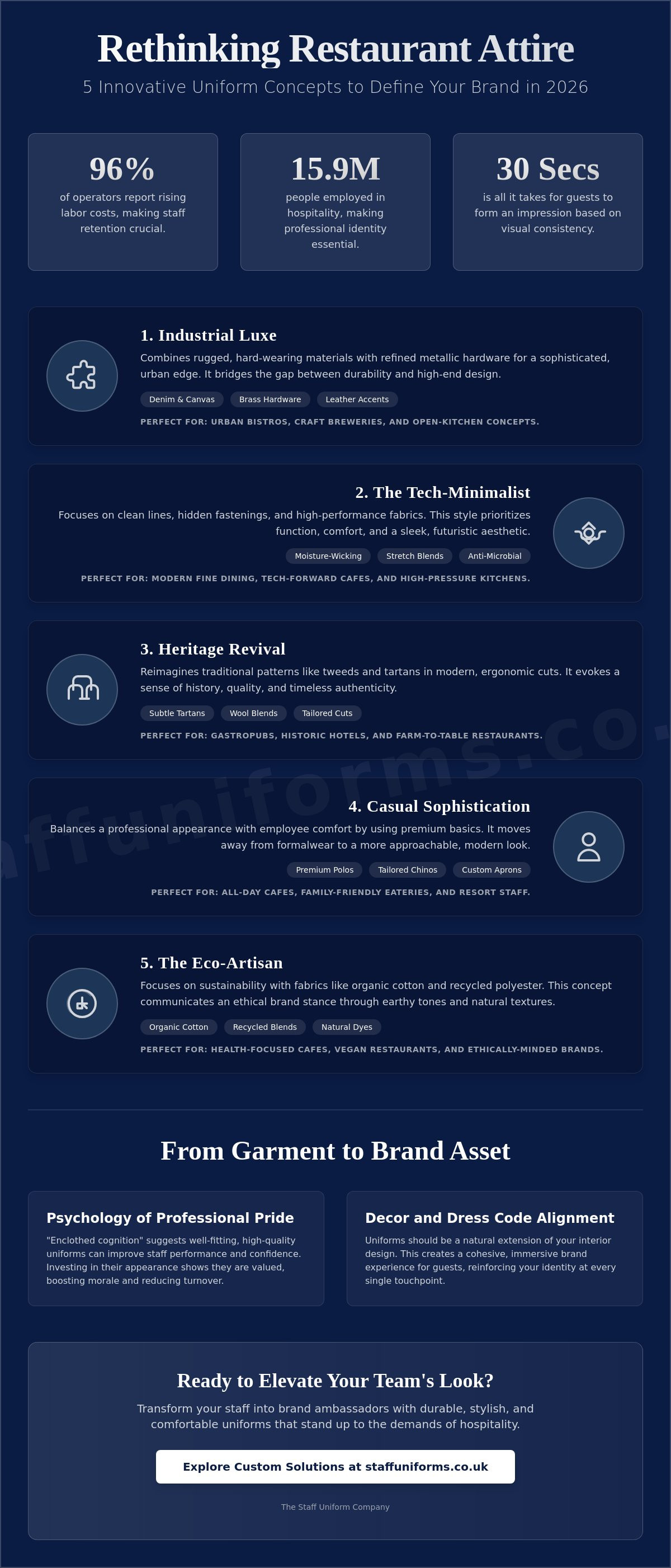
With 96% of restaurant operators reporting higher labor costs in 2026, can you afford to treat your staff attire as just another recurring expense? Most owners struggle with high turnover that sends uniform budgets skyrocketing, or they find their team's appearance clashes with the restaurant's decor. Finding unique restaurant uniform ideas isn't just about aesthetics. It's about choosing durable, functional tools that reflect your brand's excellence. We understand that a professional image is a vital component of business success, especially as the industry prepares to employ 15.9 million people this year.
You already know that your team's presentation directly impacts the guest experience and internal morale. This article will show you how to transform functional workwear into a powerful brand asset that stands up to industrial washing and daily wear. We'll examine how to balance minimalist designs with high-performance materials and ergonomic cuts. From custom embroidery to technical chef jackets, you'll learn how to build a cohesive look that ensures your staff takes pride in their professional identity while meeting essential safety and compliance standards.
Key Takeaways
- Learn how to transition your staff from service roles to brand ambassadors by aligning their attire with your restaurant's core identity.
- Explore unique restaurant uniform ideas for 2026, including Industrial Luxe and Tech-Minimalist styles that balance modern aesthetics with operational efficiency.
- Understand how to select high-performance fabric blends that provide the durability and comfort required for fast-paced hospitality environments.
- Identify the most effective customization techniques, such as precision embroidery, to elevate standard hospitality uniforms into distinctive brand assets.
- Streamline your procurement process by following a structured lifecycle to ensure a seamless rollout and consistent quality across all locations.
Beyond the Basic Apron: Why Unique Uniforms Define Modern Dining
In the modern dining environment, a uniform is no longer just a garment to protect clothing from spills. It's a strategic tool. It aligns your brand's values with the physical appearance of your team. In 2026, the hospitality sector is seeing a clear shift. Staff are no longer "invisible" background workers. They're brand ambassadors. When guests walk through your doors, they form an opinion in the first 30 seconds. Visual consistency across your front-of-house team establishes trust and expertise immediately. Exploring unique restaurant uniform ideas allows you to bridge the gap between a generic work environment and a curated dining experience.
High staff turnover remains a significant challenge for operators. In 2026, labor costs are rising, making retention a financial priority. Providing high-quality gear isn't just a perk; it's a strategic investment. When staff feel that their employer invests in their professional appearance, they feel more valued. This sense of belonging often leads to higher morale and lower turnover rates. It's about moving from "disposable" workwear to attire that carries professional weight. A cohesive team appearance signals to the guest that the operation is disciplined and detail-oriented.
The Psychology of Professional Pride
The concept of "enclothed cognition" suggests that the clothes we wear influence our psychological processes. In a restaurant, this means a well-tailored shirt or a crisp jacket can actually improve performance. We've moved away from the "one-size-fits-all" approach. Modern procurement focuses on inclusive, well-cut garments that fit diverse body types. While the traditional chef's uniform was designed primarily for safety and heat protection, today's versions also prioritize the wearer's confidence. High-quality fabrics like breathable poly-cotton blends signal that the business values excellence, which staff then mirror in their service.
Bridging the Gap Between Decor and Dress Code
Your staff attire should feel like a natural extension of your interior design. If your restaurant features industrial elements like exposed brick and reclaimed wood, your team shouldn't be wearing delicate, formal silks. Instead, look at heavy-duty hospitality aprons in canvas or denim with brass hardware. This creates a seamless "vibe" that guests appreciate subconsciously. Analyze your interior palette. Use your wall colors or upholstery textures to inform your thread choices for embroidery. By integrating unique restaurant uniform ideas that mirror your decor, you reinforce your brand identity at every touchpoint. This level of detail transforms a meal into an immersive brand experience.
5 Innovative Restaurant Uniform Concepts for 2026
Developing a visual identity in 2026 means moving beyond standard off-the-shelf options. Successful operators are now adopting unique restaurant uniform ideas that function as an extension of their interior design and service philosophy. This year, the industry is seeing five distinct conceptual shifts that prioritize durability, comfort, and brand alignment.
- Industrial Luxe: This concept combines rugged materials like denim and canvas with refined brass or copper hardware. It's perfect for urban bistros and open-kitchen concepts.
- The Tech-Minimalist: This style focuses on clean lines and hidden fastenings. It utilizes moisture-wicking performance fabrics to keep staff cool in high-pressure environments.
- Heritage Revival: Traditional British patterns, such as subtle tartans or tweeds, are reimagined in modern, ergonomic cuts. It's an excellent choice for gastropubs with a history.
- Casual Sophistication: This approach replaces traditional formalwear with premium polo shirts and tailored chinos. It adheres to guidelines for a modern dress code by balancing professional standards with employee comfort.
- The Eco-Artisan: Focused on sustainability, this concept uses organic cotton and recycled polyester blends. The color palettes often feature earthy, natural dyes that reflect an ethical brand stance.
Industrial Luxe: Denim, Leather, and Metal
The "Industrial Luxe" aesthetic has gained significant traction in 2026. One of the most practical developments is the rise of the "Cross-Back" apron. Unlike traditional neck-loop styles, cross-back designs distribute weight across the shoulders. This reduces neck strain during long shifts. Many venues are now pairing heavy-duty denim aprons with modern chef jackets to create a cohesive look between the kitchen and the dining room. Using metal rivets and buckles adds a bespoke, high-end feel to standard workwear, ensuring the garments are as durable as they are stylish.
Heritage Revival: Modern Tailoring and Pattern
For establishments that value tradition, the Heritage Revival concept offers a way to look classic without appearing dated. Front-of-house managers can incorporate subtle patterns into corporate suits to stand out from the standard black-tie service. The Mandarin collar has emerged as a sleek alternative to the traditional Oxford shirt, providing a clean, contemporary silhouette. Some venues are opting for waistcoat-only looks. This provides a classic service feel while remaining approachable and allowing for better freedom of movement. If you're looking to refresh your team's appearance, you can explore our full range of hospitality uniforms to find the right fit for your brand.
Performance Meets Aesthetics: Choosing Durable Fabrics
Selecting the right fabric is the most critical procurement decision you'll make. While aesthetics drive your brand's visual appeal, technical performance ensures your investment lasts. The debate between "unique" and "practical" often creates a friction point for operators. You want unique restaurant uniform ideas that stand out, but these designs must survive the rigors of a commercial environment. Fabric choice serves as the foundation of this balance. We prioritize high-performance blends like polycotton, bamboo, and recycled polyester because they offer the best return on investment for high-turnover hospitality settings.
Understanding technical specifications like GSM (Grams per Square Metre) is essential for different restaurant zones. A lower GSM, typically between 120 and 150, is ideal for lightweight shirts that require breathability. Conversely, heavy-duty items like trousers or aprons require a higher GSM of 200 or more to withstand friction and physical wear. Beyond weight, color fastness is a vital metric. If you've chosen a vibrant, unique brand color, the fabric must resist fading after repeated exposure to industrial detergents and high temperatures. This ensures your team looks as professional on day 100 as they did on day one.
Withstanding the Heat: Breathability in the Kitchen
Kitchen environments demand specialized material performance. Modern chef jackets now integrate mesh panelling and moisture management technology to keep culinary teams comfortable. While 100% cotton is often perceived as a premium choice, it's rarely the best option for high-intensity service. Cotton absorbs moisture and stays damp, becoming heavy and uncomfortable. Polycotton blends or moisture-wicking synthetics move sweat away from the skin. Additionally, antimicrobial finishes play a key role in maintaining hygiene and freshness, preventing the buildup of bacteria and odors in high-heat zones.
The 50+ Wash Standard: Longevity for Front-of-House
Front-of-house attire must meet the industrial laundry standard, which typically requires a garment to maintain its integrity for at least 50 intensive wash cycles. We test unique textured fabrics for pilling and shrinkage to ensure they don't degrade prematurely. Choosing "workwear grade" materials means the fibers are reinforced to handle mechanical stress. Investing in higher-quality formal shirts reduces long-term replacement costs significantly. It's a simple calculation: a garment that lasts twice as long effectively halves your annual uniform spend. This practical approach allows you to maintain a premium brand image without the constant financial drain of replacing worn-out gear.
Customising Your Look: From Embroidery to Bespoke Details
Customization is the bridge between off-the-shelf garments and a distinctive corporate identity. By utilizing custom staff uniforms UK services, you transform standard hospitality wear into proprietary brand assets. These details are essential when developing unique restaurant uniform ideas that resonate with your guests. Whether you are outfitting a boutique bistro or a national chain, the way you apply your branding defines the perceived value of your service.
Choosing between embroidery and screen printing depends on your specific environment. For hospitality, embroidery is the industry standard for durability. It survives the intensive heat of commercial laundering without fading or cracking. Screen printing may be suitable for promotional t-shirts, but it lacks the longevity required for daily service. High-definition embroidery provides a textured, premium finish that guests associate with high standards. Converting your logo into a stitch file involves a one-time digitizing process, making it a scalable solution for growing teams that need consistency across various garment types.
Modern luxury often relies on "subtle branding." This trend involves using tonal embroidery where the thread color matches the garment fabric. It creates a sophisticated, understated look that appeals to high-end clientele. You can also integrate custom buttons or branded metal toggles to provide a bespoke feel. These small touches ensure your brand identity remains consistent across different sizes, from tailored blouses to heavy-duty aprons. It's about creating a look that feels curated rather than manufactured.
Logo Placement and Visual Branding
Branding doesn't have to be limited to the left chest. Exploring alternative placements like the nape of the neck or along an apron strap adds a contemporary edge. Contrast stitching is another effective technique. By using an accent color for seams or buttonholes, you reflect your brand's palette without overwhelming the design. This level of detail-oriented customization signals professional pride to both staff and customers. It shows that every element of the dining experience has been carefully considered.
Functional Accessories as Style Statements
Accessories provide a flexible way to refresh your team's look without a full uniform overhaul. Branded ties and scarves serve as easy-to-update seasonal accents. In fast-casual settings, customized headwear can reinforce a relaxed yet professional vibe. You can also use unique hardware, such as specific zip pulls or leather strap connectors, to differentiate roles within your team. If you're ready to start building your look, you can view our full range of hospitality uniforms to find the perfect base for your customization.
Implementing Your New Vision: A Strategic Procurement Guide
Turning your unique restaurant uniform ideas into a reality requires more than just a design concept. It's a logistical operation that demands precision. Start with a comprehensive audit of your current inventory. Identify where garments are failing. Are your hospitality aprons tearing at the seams, or are your formal shirts losing their shape after ten washes? By pinpointing these pain points, you ensure your new procurement strategy addresses actual workplace needs. A successful rollout is built on data and functional requirements, not just aesthetics.
Managing the entire lifecycle from initial concept to final delivery ensures long-term brand consistency. Working with a specialist supplier like The Staff Uniform Company allows for bespoke consultations that bridge the gap between creative vision and technical feasibility. Wearer trials are a non-negotiable step in this process. Before committing to a national order, have your staff test the garments during live shifts. This feedback loop identifies issues with fit or mobility that might not be obvious in a showroom. It's better to refine a design during the sampling phase than to deal with a thousand ill-fitting garments later.
Managing the Lifecycle from Concept to Delivery
A phased rollout is often the most efficient way to implement a new vision. Instead of a "big bang" launch across all locations, start with a flagship site. Use this period to gather final staff feedback and ensure the logistics of delivery and storage are working smoothly. This measured approach reduces risk and allows for minor adjustments before the full national implementation. Sampling and wearer trials ensure the unique restaurant uniform ideas you've chosen actually work in a high-pressure kitchen or dining room environment. This process guarantees that the final product meets both your brand standards and the practical needs of your workforce.
Scaling Your Uniform Strategy Nationally
Consistency is the hallmark of a professional brand. For multi-site restaurant groups across the UK, managing logistics can become complex. We recommend setting up a dedicated ordering portal. This system allows individual site managers to re-order stock as needed while maintaining strict control over the approved brand guidelines. It simplifies the fulfillment process and ensures that a server in London looks identical to one in Edinburgh. You can standardize the primary look while still allowing for role-based variations, such as different colors for front-of-house versus bar staff. Once you're ready to elevate your brand, you can explore our full hospitality range and start your custom design journey.
Secure Your Brand Excellence for 2026
Your staff attire is the physical manifestation of your restaurant's standards. By moving beyond generic options and adopting unique restaurant uniform ideas, you bridge the gap between operational function and brand storytelling. We've explored how technical fabric choices and strategic customization turn everyday workwear into vital business tools. A successful uniform strategy prioritizes durability and professional pride, ensuring your team performs at their best while representing your corporate identity with consistency.
Managing a national rollout requires a partner who understands the complexities of the hospitality sector. We specialize in garments engineered for 50+ wash durability and provide expert logo embroidery to keep your branding crisp. With our national UK delivery and dedicated account management, we handle the logistics so you can focus on service. It's time to transform your workforce into true brand ambassadors through high-quality, reliable attire.
Design Your Unique Restaurant Uniform with The Staff Uniform Company today and build a look that lasts as long as your reputation. Your team's professional journey starts with the right gear.
Frequently Asked Questions
How often should restaurant uniforms be replaced to maintain a unique look?
Most operators replace uniforms every 6 to 12 months to ensure the team looks crisp and professional. While workwear-grade garments can withstand over 50 industrial washes, physical wear and tear in high-intensity roles eventually impacts the fabric's finish. Regular audits help you identify when fading or pilling begins to compromise your brand's visual standards.
What are the best fabrics for summer restaurant uniforms in the UK?
Lightweight polycotton blends and moisture-wicking synthetics are the most effective choices for summer service. These materials provide better breathability than heavy 100% cotton, which absorbs moisture and becomes heavy during a shift. Selecting garments with a lower GSM, typically between 120 and 140, keeps staff cool while maintaining a professional, structured appearance.
Can I get custom embroidery on waterproof or heavy-duty aprons?
Yes, high-definition embroidery can be applied to heavy-duty canvas and waterproof hospitality aprons. This technique is the industry standard for durability, as it won't crack or peel like screen printing. It's essential to use a specialist supplier who understands how to apply branding without compromising the protective integrity of specialized kitchen gear.
How do I ensure my unique uniform designs are compliant with health and safety?
Your designs must prioritize safety by avoiding loose ties or hanging elements that could snag on equipment. Kitchen attire should follow traditional safety standards, utilizing flame-resistant materials and heat-protective layers. It's also vital to ensure your policy aligns with OSHA regulations regarding personal protective equipment, such as gloves or specialized aprons for chemical handling.
Is it better to choose a classic suit or a casual look for my servers?
The decision should align with your restaurant's price point and interior vibe. Formal corporate suits and blazers are perfect for fine dining environments where guests expect a high level of ceremony. Casual looks, such as premium polo shirts paired with tailored chinos, are better suited for modern bistros or fast-casual concepts where an approachable atmosphere is key.
What is the minimum order quantity for custom branded uniforms?
Minimum order quantities depend on the level of customization and the specific garment type. Many professional suppliers offer flexible options for smaller boutique teams, while bespoke manufacturing runs for national groups typically require higher volumes. Discussing your headcount during a consultation will help determine the most efficient procurement route for your business.
How can I balance a unique style with a limited budget?
Focus your investment on a single "hero" item, such as a custom-embroidered apron or a high-quality chef jacket, and pair it with standard trousers. This approach allows you to implement unique restaurant uniform ideas without the expense of a fully bespoke head-to-toe kit. Prioritizing durability in these core pieces reduces your long-term spend by lowering the frequency of replacements.
What are the most popular restaurant uniform trends for 2026?
Current 2026 trends emphasize minimalist silhouettes, earthy color palettes, and the use of sustainable recycled textiles. We're seeing a move toward ergonomic designs, such as cross-back aprons that distribute weight more evenly to reduce staff fatigue. These unique restaurant uniform ideas focus on combining high-end aesthetic appeal with the practical requirements of a fast-paced hospitality environment.