

Could the specific shade of your uniform be the silent factor affecting your clinic's efficiency and client trust? While there's no official UK regulation mandating a specific palette, many practices struggle with role confusion and uniforms that look tired after only a few weeks of heavy use. You've likely noticed how quickly a light-coloured top becomes a magnet for stubborn pet hair and clinical fluids.
If you're wondering what colour scrubs do vets wear to maintain a sharp, authoritative image, you aren't alone. Most UK professionals now lean toward navy, teal, and royal blue to balance a calming atmosphere with the practical need to hide debris. This guide explains the most common veterinary scrub colours for 2026, helping you distinguish clinical roles and choose durable, high-performance fabrics that withstand industrial laundering. We'll look at the psychology of colour in the exam room and provide a clear strategy for implementing a professional uniform code that boosts team morale and enhances your brand's reputation.
Key Takeaways
- Modernise your clinic image by adopting the latest UK trends in navy and charcoal, moving beyond traditional surgical greens.
- Implement a role-based coding system to clarify what colour scrubs do vets wear versus nurses, instantly improving client communication.
- Optimise daily maintenance by choosing shades that specifically conceal pet fur and clinical fluids.
- Leverage the psychology of "Fear Free" colours to reduce animal anxiety and project professional competence to owners.
- Prioritise material longevity by selecting high-performance fabrics designed to withstand the rigours of industrial laundering.
Common Veterinary Scrub Colours in the UK
Visual identity in a clinical setting serves a functional purpose. Deciding what colour scrubs do vets wear often starts with understanding the clinical logic behind traditional choices. While individual practices have the freedom to choose their own palettes, the UK market follows specific norms that balance heritage with modern professional standards. These colours aren't just for show; they're selected to manage the high-pressure environment of a busy veterinary surgery.
The Heritage of Surgical Green and Ceil Blue
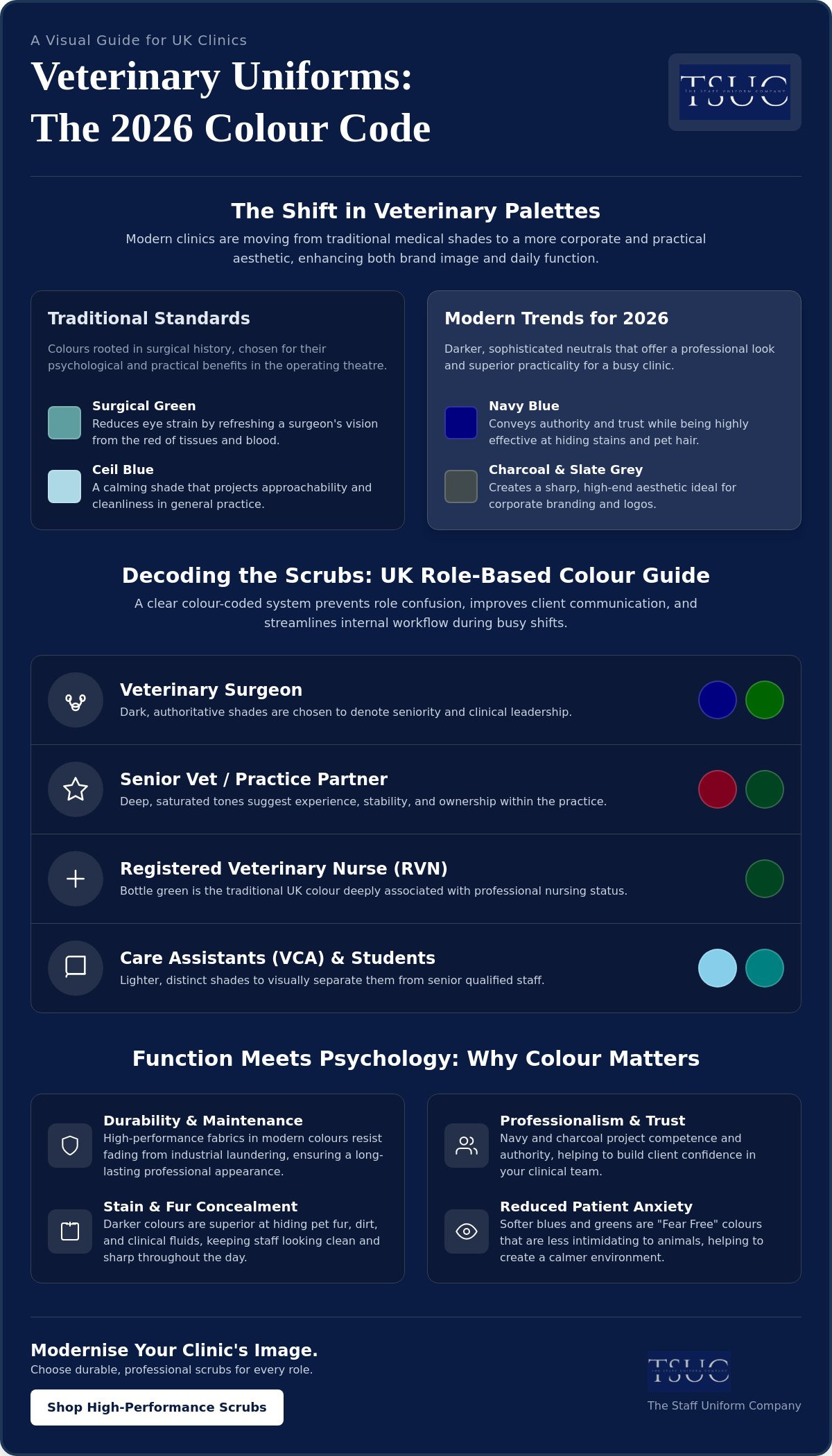
Traditional greens and blues remain the global standard for surgical environments. This isn't a coincidence. These colours sit opposite red on the colour wheel, which helps to neutralise the visual impact of blood during procedures. In the high-intensity environment of an operating theatre, staring at red tissues for long periods can cause green ghost-like illusions on white surfaces. Using green or blue fabric refreshes a surgeon's vision and reduces eye strain under bright clinical lights.
Historically, Scrubs (clothing) were strictly reserved for the theatre to maintain sterile conditions. However, the practicality of these garments led to their adoption across general practice. Ceil blue, a soft and calming shade, is particularly popular in UK small animal practices because it projects a sense of approachability and cleanliness without the harshness of traditional hospital white.
Modern Trends: The Shift Towards Professional Neutrals
The UK veterinary sector is seeing a significant move toward "corporate" aesthetics, especially within larger veterinary groups and referral hospitals. Slate grey, charcoal, and navy blue are dominating 2026 practice rebrands. These darker neutrals offer a sophisticated look that aligns with high-end consultancy. They provide a sharp background for embroidered practice logos, ensuring your branding stands out clearly to clients.
Beyond the professional look, these shades are highly practical. Darker colours excel at concealing the inevitable stains and animal hair that accumulate during a shift. When clients ask what colour scrubs do vets wear in your specific practice, the answer should reflect your team's expertise and role structure. Navy blue is currently a top choice for veterinary surgeons because it conveys authority while remaining more practical than black, which can sometimes appear too sombre in a pet-care environment.
Seniority and Specialised Care
Many practices use colour to signal seniority or clinical specialisms. Burgundy and bottle green are classic choices often reserved for senior vets or practice partners. These deep, saturated tones suggest experience and stability. In contrast, paediatric or exotic animal departments sometimes opt for patterned or "fun" scrubs. While less common in standard consultations, these patterns can help put anxious owners at ease and create a less intimidating atmosphere for exotic patients that may be sensitive to solid, bright blocks of colour.
Using Scrub Colours for Role Identification
Clarity saves time in a clinical environment. When a pet owner enters a practice during a high-stress emergency, they need to identify the lead clinician immediately. By implementing a systematic approach to uniform colours, practice managers can streamline internal communication and reduce the burden on front-of-house staff. When deciding what colour scrubs do vets wear, the primary goal is often role differentiation. This strategy ensures that everyone, from the surgical lead to the student nurse, is easily identifiable by colleagues and clients alike.
A Standard UK Role-Based Colour Framework
Most UK practices follow a tiered hierarchy to maintain professional boundaries. Veterinary surgeons often wear darker, authoritative shades like navy or forest green. These colours denote seniority and clinical expertise. Registered Veterinary Nurses (RVNs) traditionally wear bottle green in the UK, a colour deeply associated with their professional status. Veterinary Care Assistants (VCAs) and student nurses typically occupy the lighter end of the spectrum, wearing sky blue or teal to distinguish them from qualified staff. This visual shorthand allows for instant recognition during busy shifts.
Front-of-house teams should also be distinct. While receptionists may not require clinical scrubs, their attire should complement the practice's palette. If they do wear scrubs for practical reasons, choosing a contrasting colour like charcoal or a professional tunic helps prevent clients from mistaking administrative staff for medical personnel. Building a professional identity starts with selecting high-quality Medical Scrubs & Healthcare Uniforms that reflect your clinic's standards.
The Impact on Client Experience
Role confusion is a significant pain point for pet owners. If a client mistakenly asks a student nurse for a complex surgical update, it creates an awkward interaction and potentially spreads misinformation. A clear colour-coding system eliminates this friction. It empowers owners to approach the right person for the right information, which builds trust and perceived competence. Using the right scrubs UK providers offer allows practices to create a cohesive brand identity that spans all roles, from the consult room to the reception desk.
This consistency also benefits the internal team. In a surgical setting, knowing exactly who is a technician and who is a surgeon without checking name badges can shave vital seconds off response times. It fosters a sense of professional pride, as staff members feel a sense of belonging to their specific clinical tier. A well-designed uniform policy isn't just about aesthetics; it's a functional tool for better practice management.
Practical Factors: Hiding Hair, Stains, and Fluids
Maintaining a professional appearance throughout a ten-hour shift is a challenge unique to veterinary medicine. Between surgical procedures and routine consultations, uniforms are subjected to a constant barrage of organic material. When evaluating what colour scrubs do vets wear, practicality must take precedence over aesthetics. The goal is a shade that masks the evidence of a busy day, ensuring staff look as fresh for their final appointment as they did for their first. A clinician covered in visible stains or excessive pet hair can inadvertently signal a lack of hygiene to observant pet owners.
The Science of Hiding Pet Hair
The "Fur Factor" is the most persistent daily issue. Mid-tone blues and greys are the "Goldilocks" of fur management. Unlike black scrubs, which highlight every speck of white dander and light-coloured hair from breeds like Golden Retrievers, these mid-tones effectively camouflage a variety of coat types. Material choice is just as critical as the shade. Antistatic fabrics reduce the adhesion of animal hair. This allows it to be easily brushed off between appointments rather than becoming permanently embedded in the weave.
Stain Management in the Consultation Room
Organic fluids present a different set of problems. Darker shades like burgundy, navy, and charcoal are superior for concealing blood, bile, and other clinical fluids. While traditional light blue and pale green are staple colours in sterile theatre environments, they fail quickly in the consultation room. Every minor splash is immediately visible. For practices that use iodine or chlorhexidine regularly, these darker, saturated colours provide a necessary buffer against the stubborn yellow and pink staining common with antiseptic spills.
Infection control protocols often require laundering at high temperatures. Lower-quality garments often suffer from rapid fading after just a few cycles, leaving the team looking unprofessional and the practice image diminished. High-performance fabrics are engineered for colour fastness. They maintain their deep hues even after industrial-level washing. This durability is a vital tool for business success, as it extends the lifecycle of the uniform and ensures a consistent brand representation across the entire workforce. Choosing professional-grade Medical Scrubs & Healthcare Uniforms ensures your team remains presentable even after the most demanding shifts.
The Psychology of Colour in Veterinary Practices
Design choices in a clinical environment often extend beyond mere aesthetics. In a veterinary setting, the psychological impact of your team's attire affects two distinct audiences: the human owners and the animal patients. While we've discussed how practical factors influence what colour scrubs do vets wear, the emotional response to these shades is equally significant. A well-chosen palette can lower the heart rate of an anxious feline or reassure a worried pet owner that their companion is in capable hands. Understanding these psychological cues is a vital tool for business success.
Can Pets See Your Scrub Colour?
Dogs and cats possess dichromatic vision. This means they see the world primarily in shades of blue and yellow, while reds and greens often appear as various tones of grey or brown. High-contrast patterns or stark white can be visually startling to a stressed animal, potentially triggering "White Coat Syndrome." This phenomenon, where a pet's blood pressure rises simply due to the presence of a clinical figure, is why traditional white lab coats have largely been phased out in favour of softer tones.
Solid, mid-tone blues and greens are widely considered "Fear Free" choices. Because these colours are easily distinguishable but not visually aggressive to pets, they help create a more neutral environment. Many feline-only clinics specifically choose soft lavender or muted teal to foster a sense of calm. Avoiding busy patterns prevents unnecessary visual stimulation, allowing the patient to focus on the clinician's movements rather than a distracting uniform.
Professionalism and the "Expert" Look
For the human client, uniform consistency is a powerful indicator of clinical competence. When a team presents as a unified strategic unit, it reinforces the perceived value of the services provided. A fragmented look, where staff wear mismatched shades or faded garments, can subtly undermine owner trust. Clients associate specific colours with cleanliness and precision. Deep navy and charcoal are often perceived as highly professional and authoritative, suggesting a level of sophisticated care that justifies premium consultation fees.
Framing your team through a consistent colour palette also improves internal morale. It creates a sense of professional pride and belonging. When everyone wears high-quality, coordinated attire, it signals that the practice values excellence in every detail. To achieve this level of professional presentation, you can explore a wide range of durable Medical Scrubs & Healthcare Uniforms designed to maintain their visual impact over time. This investment in your team's appearance pays dividends in client retention and overall practice reputation.
Choosing High-Performance Scrubs for Your Practice
Selecting the right hue is a strategic branding decision, but the physical performance of the garment determines its long-term value. In a fast-paced UK veterinary clinic, "fashion" scrubs often fail because they lack the structural integrity required for technical work. When you decide what colour scrubs do vets wear in your practice, you must also ensure the fabric technology supports your team's daily challenges. High-performance uniforms act as a vital tool for business success, balancing professional presentation with extreme durability.
Technical Specifications for Veterinary Use
Material composition is the foundation of uniform longevity. While traditional poly-cotton blends are breathable and cost-effective, modern synthetic blends offer superior performance. Four-way stretch fabrics provide the mobility needed for restraining large animals or performing intricate surgeries. These advanced synthetics often feature moisture-wicking properties and fluid-repellent finishes, which are essential for managing the organic spills discussed in previous sections.
Reinforced stitching at stress points and strategic pocket placement for stethoscopes, thermometers, and pens are non-negotiable features. Before committing to a specific shade, verify that your supplier can guarantee long-term colour continuity. There is little value in a perfect corporate palette if the specific tone is discontinued next season, leaving new hires with mismatched attire. Choosing professional-grade Medical Scrubs & Healthcare Uniforms ensures your practice maintains a consistent, high-quality image for years to come.
Branding Your Practice with Custom Scrubs
Customisation transforms a standard garment into a powerful marketing tool. To make your practice logo pop, choose embroidery colours that offer high contrast against your scrub shade. Silver or white thread works exceptionally well on navy and charcoal, while darker embroidery provides a sophisticated look on teal or sky blue. Utilising custom staff uniforms UK services allows you to manage the entire lifecycle of your brand identity, from initial concept to final delivery.
A unified team appearance improves internal morale and enhances external perceptions of your business. Before placing a bulk order, use this final procurement checklist to ensure your investment meets professional standards:
- Does the fabric offer antimicrobial or fluid-repellent properties?
- Can the supplier guarantee the same colour for future re-orders?
- Is the material rated for high-temperature industrial laundering?
- Are the pockets and seams reinforced for clinical equipment?
- Does the chosen colour align with your role-based identification strategy?
By prioritising these functional requirements, you ensure that your team remains comfortable, protected, and professionally presented. The right uniform strategy doesn't just answer the question of what colour scrubs do vets wear; it establishes a standard of excellence that defines your entire practice.
Elevate Your Practice Standards with Strategic Uniform Choices
Deciding what colour scrubs do vets wear is a foundational step in building a professional brand identity. By moving beyond traditional surgical greens and adopting a role-based coding system, you improve both client trust and internal efficiency. Your choice affects more than just aesthetics. It influences the stress levels of your patients and determines how well your team manages the practical realities of fur and clinical fluids during a busy shift.
Investing in high-performance attire ensures your team remains presentable and comfortable. At Staff Uniforms, we are a trusted UK supplier of durable healthcare attire. Our garments feature high-quality fabrics engineered to withstand 50+ industrial washes; this maintains their professional appearance over the long term. We also provide expert logo embroidery services to ensure your branding is as precise as your clinical care. View our range of high-performance Medical Scrubs & Healthcare Uniforms to find the perfect fit for your clinic's needs.
It's clear that a well-considered uniform is a vital tool for business success. Start your transition today and watch how a coordinated, professional image transforms your practice environment.
Frequently Asked Questions
Do UK vets have a mandatory scrub colour?
UK veterinary professionals don't have a legally mandated uniform colour. Instead, individual practices, veterinary schools, and corporate groups establish their own internal policies. This flexibility allows clinics to align their attire with their specific brand identity or regional preferences. When deciding what colour scrubs do vets wear, managers typically prioritise practical factors like stain concealment and role identification rather than following a national standard.
What is the best scrub colour for hiding dog and cat hair?
Mid-tone blues and greys are the most effective shades for concealing pet hair. These "Goldilocks" colours provide a neutral background that masks both light-coloured fur from breeds like Labradors and darker hair from black cats. Black and very dark navy scrubs are often impractical as they highlight white dander and lint. Choosing a shade that matches the most common patient breeds in your local area can significantly reduce the time staff spend using lint rollers between appointments.
Why do many vets wear green or blue instead of white?
Vets avoid white because it highlights every clinical stain and causes significant eye strain in surgical environments. Under the intense lights of an operating theatre, white surfaces create a harsh glare that leads to visual fatigue. Green and blue are used because they are opposite to red on the colour wheel. This contrast helps surgeons maintain visual acuity by neutralising the red tones of blood and tissue during long procedures.
Can veterinary nurses wear the same colour as the vets?
Veterinary nurses can wear the same colour as surgeons, but most modern practices avoid this to prevent role confusion. Distinguishing between a Registered Veterinary Nurse (RVN) and a Veterinary Surgeon helps clients understand who to approach for specific medical updates. Standard UK practice often assigns bottle green to nurses and navy or forest green to vets. This visual hierarchy improves team communication and ensures pet owners feel confident in the expertise of the person treating their animal.
What scrub colours are considered the most professional for a private practice?
Navy blue, charcoal grey, and deep bottle green are consistently ranked as the most professional choices for private practices. These saturated, darker tones convey a sense of authority, cleanliness, and clinical excellence. They provide a sophisticated backdrop for practice logos and tend to look newer for longer than lighter shades. When assessing what colour scrubs do vets wear in high-end clinics, you'll almost always find a palette based on these dependable neutrals.
How do I choose a colour that won’t fade after repeated 60-degree washes?
Focus on technical fabric specifications rather than just the shade itself. Look for advanced synthetic blends or vat-dyed materials specifically designed for industrial laundering. These high-performance fabrics are engineered to retain their pigment even after repeated 60-degree washes, which is essential for infection control. Lower-quality poly-cotton garments often suffer from "frosting" or rapid fading, which can make a team look unprofessional within just a few months of use.
Are patterned scrubs appropriate for professional veterinary surgeons?
Patterned scrubs are generally considered less professional for veterinary surgeons in a standard consultation setting. While they might be used in exotic or paediatric animal care to create a less intimidating atmosphere, solid colours are preferred for general practice. Solid tones project a sense of stability and clinical precision. Most practices reserve patterns for specific events or support staff roles to ensure the lead medical team maintains a high-authority image.
Does the colour of my scrubs affect how animals behave during an exam?
The colour of your uniform can influence patient stress levels due to the dichromatic vision of dogs and cats. Pets see the world primarily in blues, yellows, and greys, so soft shades in these spectrums are less likely to cause agitation. High-contrast patterns or stark white can be visually startling and may trigger a defensive response. Choosing muted, solid colours helps create a "Fear Free" environment that supports calmer examinations and better clinical outcomes.