
What if the physical exhaustion you feel at hour ten isn't just about the patient load, but the heavy, restrictive fabric you're wearing? Most UK healthcare professionals accept that by the end of a 12-hour rotation, they'll be overheated, chafed, and looking slightly dishevelled. You likely believe that "uniform fatigue" is simply an unavoidable part of the job. However, the weight of your gear shouldn't be another obstacle in a high-pressure ward. Choosing the right lightweight scrubs for long shifts is a strategic decision that directly impacts your stamina and focus.
We understand that your uniform is a vital tool for professional success. This guide explores how advanced lightweight fabric technology reduces shift fatigue and enhances performance during those demanding rotations. We'll preview the 2026 NHS national uniform standards and the technical benefits of moisture-wicking, 145gsm materials that stay crisp under pressure. You'll learn how to maintain a professional appearance while meeting strict infection control requirements. By the end, you'll know exactly how to select high-performance gear that supports your clinical expertise and your physical well-being throughout the longest shifts.
Key Takeaways
- Learn how reducing garment weight by up to 30 percent can significantly lower physical strain and uniform fatigue during extended rotations.
- Discover the specific fabric blends and moisture-wicking technologies that make lightweight scrubs for long shifts more breathable and comfortable than traditional poly-cotton.
- Understand why high-tensile synthetic fibres offer superior durability and longevity, debunking the myth that lighter materials are more fragile.
- Access a practical framework for selecting uniform designs based on clinical roles, ensuring pocket configurations and fit support high-performance medical work.
- Identify how to balance technical performance with professional branding to improve staff morale and patient perceptions across your facility.
Beyond the 12-Hour Mark: Why Scrub Weight Matters
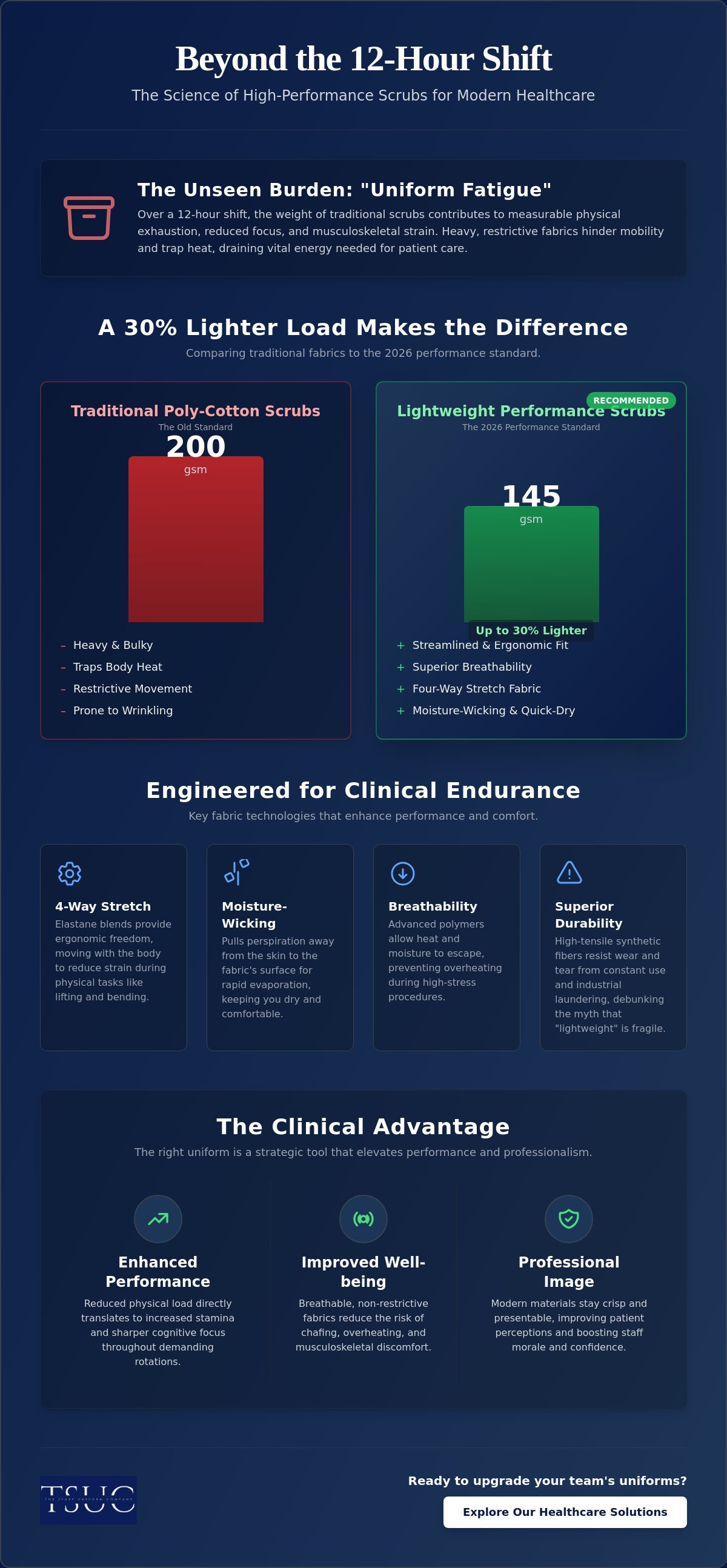
In a high-intensity healthcare environment, every gram of equipment counts. While medical professionals often focus on footwear or stethoscopes, the weight of their primary workwear is frequently overlooked. We define lightweight scrubs for long shifts as garments engineered to weigh 25% to 30% less than traditional polyester-cotton blends. This reduction isn't just about comfort; it's a technical requirement for maintaining peak performance during a standard 12-hour rotation. When your uniform is lighter, your body expends less energy simply moving through the ward, allowing you to dedicate that stamina to patient care.
The cumulative effect of heavy fabric is a phenomenon we call "uniform fatigue." At the start of a shift, a few hundred extra grams might feel insignificant. However, by hour ten, that weight contributes to a measurable decline in physical focus and cognitive sharpness. Heavy fabrics drag on the shoulders and waist, creating a subtle but constant drain on your energy reserves. Modern lightweight designs solve this by utilizing four-way stretch fabrics. These materials move with you rather than against you, providing an ergonomic advantage that supports the dynamic, often unpredictable movements required in clinical settings.
Space is a luxury in busy ERs, intensive care units, or compact dental suites. Traditional, bulky scrubs can snag on equipment or restrict your range of motion when navigating tight corners. Streamlined, lightweight garments reduce this physical profile. They provide a closer, more athletic fit that improves mobility without sacrificing the professional silhouette expected of UK healthcare leaders. By choosing a lower-bulk option, you ensure that your clothing is a facilitator of your work, not a hindrance.
The Physical Toll of Traditional Medical Workwear
Standard heavy fabrics are notorious for trapping body heat, which can lead to an elevated heart rate and premature exhaustion. Understanding the history and purpose of medical scrubs reveals how materials have evolved from basic protection to performance-driven tools. Traditional stiff cotton fails to support the constant reaching, bending, and lifting involved in modern nursing. This resistance often leads to unnecessary back and shoulder strain. When your clothing doesn't stretch, your muscles have to work harder to overcome the fabric's tension, increasing the risk of musculoskeletal discomfort by the end of the week.
Defining Performance Standards for 2026
As we move through 2026, the benchmark for "lightweight" has shifted toward a specific technical standard. High-performance medical textiles now typically aim for a weight of approximately 145gsm (grams per square metre). This is a significant departure from the heavy, 200gsm fabrics of the past. We've seen a decisive transition from basic natural fibres to moisture-wicking synthetic polymers that offer superior breathability. In climate-controlled UK hospitals, where temperatures remain high regardless of the season, this constant airflow is essential. These modern polymers ensure that heat is dissipated quickly, keeping the wearer cool and composed even during the most demanding clinical procedures.
The Science of Breathability: Fabric Technologies for 2026
Modern textile engineering has moved beyond simple cotton-rich blends. In 2026, the industry standard for lightweight scrubs for long shifts relies on a sophisticated mix of recycled polyester and elastane. This combination provides the structural integrity needed for a professional image while offering the extreme flexibility required for clinical tasks. Recycled polyester is particularly valued for its durability and low environmental impact, making it a sustainable choice for large-scale healthcare procurement without compromising on technical performance.
Moisture-wicking technology is no longer a luxury; it's a functional necessity for the modern ward. This process involves moving perspiration away from the skin to the fabric's outer surface where it can evaporate quickly. By keeping the wearer dry, these fabrics prevent the skin irritation and chafing often associated with heavy, sweat-soaked materials. Many premium garments now feature antimicrobial finishes as well. These integrated treatments inhibit the growth of odour-causing bacteria, ensuring that staff remain fresh and confident during the final hours of a demanding rotation.
For healthcare workers who commute via bicycle or on foot, quick-dry properties are a significant advantage. A uniform that dries within minutes of a rain shower or a high-intensity clinical incident ensures you aren't stuck in damp, heavy clothing for the remainder of your shift. For a deeper look at how these standards are evolving across the sector, consult our Scrubs UK: The Professional 2026 Guide. Understanding these material shifts helps decision-makers select gear that actually supports the workforce.
Moisture Management and Thermoregulation
Unlike cotton, which absorbs moisture and becomes heavy, performance synthetic fibres use capillary action to transport fluid. This keeps the fabric light and breathable even in high-pressure situations. Many advanced designs incorporate mesh panelling or laser-cut ventilation in high-heat zones like the underarms and back. This targeted airflow helps maintain a consistent core temperature, preventing the cognitive dip that often follows overheating during a clinical emergency. You can explore our range of technical healthcare uniforms to see these performance features in action.
Stretch and Recovery: The Elastane Advantage
The distinction between 2-way and 4-way stretch is critical for clinical mobility. While 2-way stretch offers horizontal flexibility, 4-way stretch expands both horizontally and vertically. This ensures that the garment moves with the body during complex manoeuvres, such as patient transfers or emergency response. High-quality elastane also provides "fabric memory." This technical property prevents the material from bagging at the knees or elbows, maintaining a sharp, professional silhouette regardless of how many times you bend or reach throughout the day.
Balancing Durability with Lightweight Performance
A common misconception in procurement is that reducing garment weight compromises the longevity of the uniform. Many professionals assume that "lightweight" is synonymous with "fragile," especially in the high-friction environment of a hospital. This isn't the case with modern textile engineering. In fact, high-tensile synthetic fibres, such as advanced polyester polymers, consistently outlast traditional cotton in standardised Martindale abrasion tests. These materials are designed to withstand the rigours of the ward while maintaining a feather-light feel that makes lightweight scrubs for long shifts a superior ergonomic choice.
Durability in a lighter garment depends heavily on construction. Reinforced stitching is non-negotiable for lightweight garment construction to prevent failure at high-stress points like pockets and side seams. We look for double-needle or flat-felled seams that provide structural integrity without adding unnecessary bulk. This ensures that the garment remains a reliable tool for the wearer, even when pockets are loaded with diagnostic tools and personal devices. By focusing on these technical details, we provide gear that doesn't just feel better, but actually lasts longer than heavier, less advanced alternatives.
Modern performance textiles are specifically engineered to withstand 60-degree infection control washes. This is a critical requirement for UK healthcare settings, particularly with the 2026 rollout of new national uniform standards. You don't have to choose between a cool, breathable fabric and one that meets rigorous thermal disinfection protocols. These synthetics are built to survive high-temperature industrial cycles without the shrinking or warping that often plagues natural fibres.
Infection Control and Industrial Laundering
Modern synthetics hold colour significantly better than cotton after 50 or more industrial wash cycles. While traditional scrubs often look grey and tired after a few months, performance blends retain their original hue, ensuring a consistent professional image for your team. These fabrics also offer superior resistance to bleach splashes and common clinical chemical spills. This chemical stability means the fabric fibres don't break down as quickly as cellulose-based materials, maintaining garment integrity during frequent high-temperature sanitisation cycles.
Opacity and Professionalism
High-density weaving ensures that even the lightest materials remain completely opaque. By using micro-denier yarns, manufacturers create a fabric that is thin and breathable yet provides full coverage, giving staff maximum professional confidence. Another major advantage for busy healthcare professionals is the "no-iron" benefit of synthetic blends. These garments naturally resist wrinkling, meaning you'll look as crisp and professional at the end of a 12-hour shift as you did at the start. It's a practical solution that saves time and supports the psychological pride associated with a well-maintained professional appearance.
Selecting Lightweight Scrubs for Your Healthcare Team
Procurement for a healthcare facility requires balancing individual comfort with institutional standards. When selecting lightweight scrubs for long shifts, managers must consider the specific physical demands of different departments. A one-size-fits-all approach often leads to staff dissatisfaction and reduced efficiency. Instead, we recommend a role-based framework to ensure every staff member has the right tool for their specific tasks. This transition from traditional heavy fabrics to performance wear is a strategic move that improves overall workforce morale and stamina.
Transitioning a large team requires a focus on both functionality and identity. While the technical benefits of reduced weight are clear, maintaining a unified professional image is equally important for patient trust. For many trusts and private clinics, this involves investing in custom staff uniforms UK. This approach allows you to integrate specific role-based colours or branding while ensuring the entire team benefits from modern, breathable fabric technology.
Role-Based Fabric Selection
- Theatre Staff: These professionals require a precise balance of fluid resistance and breathability under high-intensity surgical lights.
- Ward Nurses: The priority here is maximum airflow and 4-way stretch to support frequent patient handling and constant movement.
- Dental and Aesthetic Clinicians: These roles often favour ultra-light, high-stretch tunics that provide a more tailored, contemporary aesthetic for client-facing environments.
Selecting between unisex and gender-specific cuts also impacts team comfort. While unisex options simplify inventory management, gender-specific cuts often provide better ergonomic support. This reduces the physical strain that contributes to shift fatigue, especially during the final hours of a 12-hour rotation. Providing a range of fits demonstrates a commitment to staff well-being and professional pride.
Functional Features for Long Shifts
Pocket configuration is a critical detail that many standard designs overlook. In a 12-hour shift, staff carry essential tools like shears, pagers, and smartphones. Strategic pocket placement ensures these items are accessible without pulling the lightweight fabric out of shape or causing the garment to sag. We've also seen a significant rise in the popularity of yoga-style waistbands. These provide all-day abdominal comfort, moving with the wearer during bending and lifting tasks without the digging or restriction associated with traditional drawstrings.
Modern scrub tops now include specialised features like integrated ID badge loops and internal headphone routing for communication devices. These small additions improve daily efficiency and help staff maintain a tidy, professional appearance. By focusing on these granular details, you can ensure your team is equipped for success from start to finish. Ready to upgrade your facility's apparel? View our full range of medical scrubs and healthcare uniforms to find the perfect fit for your team.
Professional Healthcare Solutions from The Staff Uniform Company
Selecting a uniform supplier is a strategic decision that impacts the operational efficiency of your entire facility. At The Staff Uniform Company, we position ourselves as a dedicated partner in UK healthcare procurement rather than a simple vendor. We understand that providing lightweight scrubs for long shifts is a matter of staff safety, performance, and long-term retention. Our collections are expert-tested to ensure they meet the rigorous demands of the modern medical environment. We manage the entire procurement process from initial concept to final delivery, ensuring your team is equipped with tools that support their clinical expertise.
We invite facility managers and procurement leads to discuss their specific bulk requirements and professional branding options. While the 2026 NHS standards introduce new guidelines for infection control, we provide the technical advice needed to ensure your team remains compliant. Our team assists in navigating the complexities of fabric performance, ensuring your chosen garments can withstand high-temperature sanitisation without losing their professional finish. By choosing a comprehensive service model, you reduce the administrative burden on your facility while guaranteeing a consistent, high-quality result for every staff member.
Quality Assurance and Technical Expertise
Our commitment to technical excellence starts with rigorous fabric sourcing. We select materials that are specifically engineered to withstand the unique physical and chemical challenges of the UK healthcare sector. High-quality uniforms have a measurable psychological impact on staff morale. When professionals feel comfortable and look sharp, it fosters a sense of internal pride and belonging. This professional presentation is equally vital for patient trust. A cohesive, high-performance team projects an image of quiet confidence and expertise, which is essential for maintaining a positive brand perception in both public and private healthcare settings.
Seamless Procurement for National Providers
Managing a large-scale uniform rollout requires a partner who understands the lifecycle of professional workwear. We handle every stage of the process, from initial sizing and fit sessions to the ongoing replenishment of stock. This ensures that new hires and existing staff always have access to consistent, durable gear. Our focus is on providing long-term value, ensuring that your investment in performance apparel translates to a more focused and comfortable workforce. We simplify the logistical journey, making procurement transparent and efficient for busy decision-makers. Explore our range of professional medical scrubs to discover how our technical solutions can enhance the professional image and safety of your facility's workforce.
Future-Proofing Your Healthcare Team’s Performance
Integrating performance-driven apparel into your facility is a strategic investment in your team's long-term stamina. We've explored how reducing garment weight by 30 percent directly lowers physical fatigue during 12-hour rotations. By prioritising advanced moisture-wicking synthetics over traditional heavy cottons, you ensure your staff remains cool, mobile, and professional from the start of their shift to the final hour. It's about moving from a basic uniform to a functional tool that supports clinical excellence.
As a specialist UK supplier since 2017, The Staff Uniform Company brings deep expertise in technical fabric performance to every procurement project. We provide a comprehensive service that manages everything from initial design concepts to national delivery. Choosing the right lightweight scrubs for long shifts ensures your workforce is equipped with the gear they need for clinical success and professional pride. We're here to help you navigate the 2026 standards with confidence.
Ready to transform your team's daily experience? View our collection of lightweight, high-performance scrubs today. We look forward to helping you enhance the professional image and safety of your healthcare workforce.
Frequently Asked Questions
Are lightweight scrubs durable enough for daily hospital use?
Yes, modern lightweight scrubs are exceptionally durable because they utilise high-tensile synthetic fibres. These materials often outperform traditional cotton in standard abrasion tests. Reinforced stitching at key stress points, such as pockets and side seams, ensures the garments handle the physical rigours of a busy ward. They're designed as long-lasting tools for professionals rather than fragile items.
Can lightweight performance scrubs be washed at 60 degrees for infection control?
Most high-quality lightweight scrubs for long shifts are specifically engineered to withstand 60-degree washes. This temperature is essential for thermal disinfection and meeting UK infection control standards. Synthetic polymers like polyester and elastane maintain their structural integrity and colour better than natural fibres during these high-temperature industrial cycles, ensuring your uniform remains safe and professional.
Do lightweight scrubs require ironing after every wash?
No, a primary benefit of performance synthetic blends is their inherent wrinkle resistance. These fabrics are designed to be "wash and wear," which saves busy healthcare professionals valuable time between rotations. If you hang the garments immediately after drying, they'll typically stay crisp and professional throughout your entire shift without needing any heat treatment or pressing.
Are breathable scrubs see-through in brightly lit clinical environments?
High-performance lightweight fabrics use high-density weaving techniques to ensure they remain completely opaque. Even though the material is thinner and more breathable, the use of micro-denier yarns provides full coverage. You can feel confident in brightly lit theatres or wards knowing your uniform provides a professional and modest silhouette regardless of the fabric weight.
What is the best fabric blend for a 12-hour nursing shift?
A blend of recycled polyester and elastane is the gold standard for clinical performance in 2026. This combination offers the best balance of moisture-wicking technology, 4-way stretch, and long-term durability. It keeps you dry and moves with your body, which is essential for reducing the physical strain and uniform fatigue associated with 12-hour rotations.
How do I choose the right size in stretch-fabric scrubs?
We recommend choosing your standard size because the elastane content provides enough flexibility for a full range of motion. If you prefer a more traditional, loose fit, you might consider sizing up. However, the athletic cut of modern scrubs is designed to be streamlined without being restrictive, supporting your movements during complex clinical tasks or emergency responses.
Can I add our hospital or clinic logo to lightweight scrub fabrics?
Yes, these technical fabrics are compatible with both high-quality embroidery and heat-applied transfers. While some trust guidelines are moving toward printed identifiers for easier sanitisation, many private clinics continue to use embroidery for brand consistency. We can advise on the best application method to maintain the fabric's performance and ensure your branding looks excellent after repeated washes.
Do lightweight scrubs help with body temperature regulation in theatre?
Yes, the moisture-wicking properties and advanced airflow designs help maintain a consistent core temperature under intense theatre lights. These fabrics transport heat and sweat away from the skin to the fabric surface for quick evaporation. This prevents the overheating that often leads to a cognitive dip, allowing you to stay focused and comfortable during long surgical procedures.