
A professional uniform shouldn't just meet clinical hygiene standards; it needs to perform like high-end athletic equipment to support the physical demands of your role. Choosing the right physiotherapist uniforms uk professionals trust often feels like a compromise between looking like a surgeon or wearing a shapeless tracksuit. You need a technical solution that bridges that gap without sacrificing durability. It's frustrating when polyester fabrics trap heat during manual therapy or scrubs lose their shape after a few 60-degree industrial washes. You want your team to look as expert as the care they provide, yet many options on the market simply don't breathe or last.
This guide helps you balance clinical hygiene, athletic mobility, and professional branding. We'll show you how to build a cohesive team identity that earns patient trust while supporting infection control. You'll also learn about the latest 2026 NHS national uniform updates, including the current quality delays with white tunics, and how to select a reliable UK supplier for long-term replenishment. We've broken down the procurement process into clear, actionable steps so you can focus on your patients while we handle the technical details of your professional image.
Key Takeaways
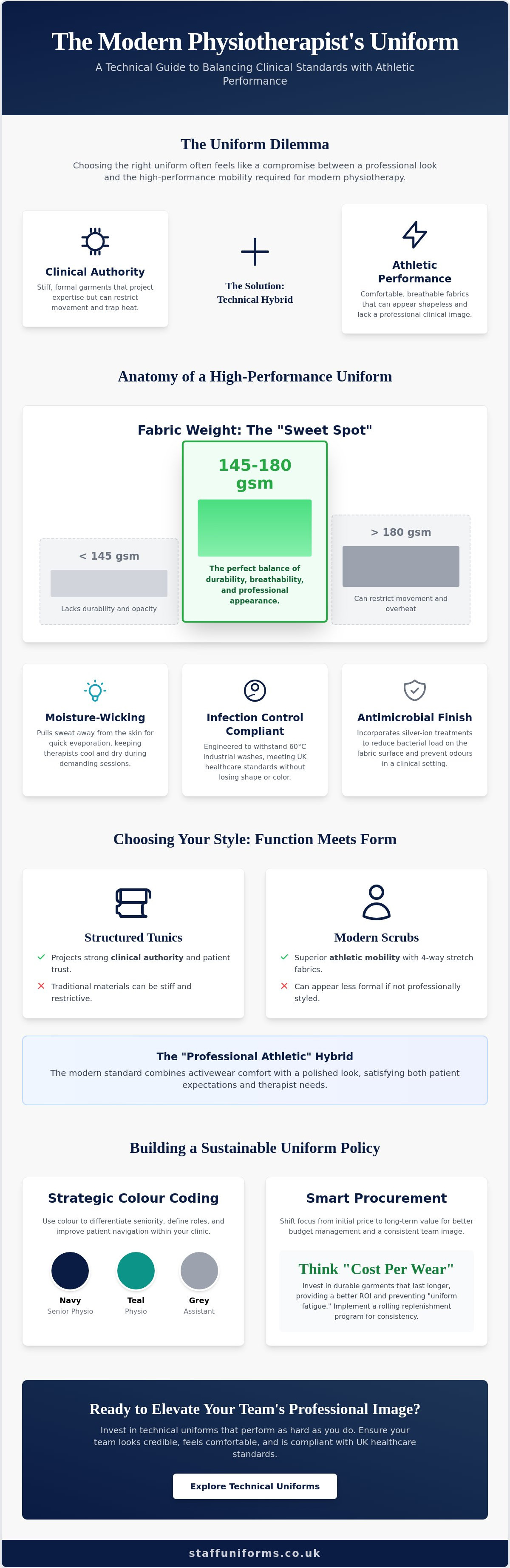
- Learn why the 145gsm to 180gsm fabric range is the "sweet spot" for balancing clinical durability with the high-intensity movement required in modern physiotherapy.
- Discover how to select the ideal physiotherapist uniforms uk teams require by comparing the clinical authority of structured tunics with the athletic mobility of modern scrubs.
- Understand the psychology of healthcare colour palettes and how shades like Navy and Teal can effectively differentiate staff seniority to improve patient navigation.
- Shift your procurement strategy from initial purchase price to a "Cost Per Wear" model to ensure long-term garment longevity and better budget management.
- Explore how to implement a rolling replenishment program that prevents "uniform fatigue" and keeps your team looking consistently professional and trustworthy.
The Evolution of Physiotherapist Uniforms in the UK
The modern physiotherapist uniform represents a strategic balance between clinical authority and physical agility. It's no longer just about looking the part; it's about garments that work as hard as the therapist. Historically, UK practitioners relied on formal white coats or stiff cotton tunics that restricted movement. Today, the industry has transitioned toward high-performance modern scrub-based uniforms and technical tunics that allow for a full range of motion. The Chartered Society of Physiotherapy (CSP) continues to play a vital role in this evolution, advocating for professional identity while ensuring uniforms meet the practical needs of a hands-on profession. For 2026, procurement priorities have shifted. Facility managers now prioritise sustainable, long-life textiles over disposable fast-fashion medical wear that fails after a few months of heavy use.
Meeting UK Healthcare Compliance Standards
UK healthcare compliance requires strict adherence to infection control. Every garment must withstand laundering at 60°C without losing structural integrity or colour. This is a non-negotiable standard for any physiotherapist uniforms uk provider. The "bare below the elbows" policy remains a cornerstone of clinical safety, influencing sleeve length and cuff design. While NHS settings often follow rigid colour-coded schemes, private sports clinics have more flexibility. However, the requirement for high-temperature washing remains universal to ensure patient safety across all therapeutic environments. As of June 2026, the NHS continues to navigate quality issues with new national white uniforms, making the selection of high-quality, durable alternatives from reliable suppliers more critical than ever for maintaining professional standards.
The Shift Toward Active-Medical Hybrid Styles
We're seeing a definitive move toward active-medical hybrid styles. Traditional stiff tunics are being replaced by four-way stretch materials that mimic high-end activewear. In private musculoskeletal (MSK) practices, the "Professional Athletic" look is now the standard. It satisfies a patient's expectation of clinical expertise while providing the therapist with the comfort needed for intensive manual therapy. A well-designed uniform reduces physical fatigue and projects an image of modern, evidence-based care. Choosing physiotherapist uniforms uk practitioners can rely on means finding fabrics that don't just look professional but actually facilitate the physical demands of the job. This hybrid approach ensures that your team stays cool and mobile during back-to-back clinical sessions while maintaining a polished, trustworthy appearance.
Modern procurement isn't just about the initial cost. It's about investing in textiles that offer longevity. Cheap fabrics often fade or lose their shape after a few high-temperature washes, leading to a ragged professional image. By choosing technical fabrics designed for the 2026 market, clinics can ensure their staff remains comfortable and compliant for the long term.
Key Technical Features: Fabric Performance and Mobility
High-performance physiotherapy requires garments that act as technical equipment rather than just a professional cover. When procuring physiotherapist uniforms uk clinics often overlook the specific weight of the fabric. The "sweet spot" for clinical environments sits between 145gsm and 180gsm. This range provides enough density to ensure the garment is opaque and durable through industrial washes, yet light enough to prevent overheating during intensive manual therapy sessions. Heavier fabrics often restrict movement, while anything lighter than 145gsm lacks the structural integrity needed for a busy musculoskeletal (MSK) practice.
Effective moisture management is equally critical. Modern textiles utilise capillary action to pull sweat away from the skin, allowing it to evaporate quickly. This science of moisture-wicking ensures therapists stay cool and dry, even in poorly ventilated treatment rooms. To maintain a sterile environment, 2026 fabric technology often incorporates silver-ion antimicrobial treatments. These finishes reduce the bacterial load on the fabric surface and prevent the build-up of odours in high-contact professions. You can find a wide selection of these technical medical scrubs and healthcare uniforms designed specifically for the physical demands of the UK market.
Four-Way Stretch vs. Mechanical Stretch
Understanding the difference between stretch types is vital for therapists performing complex spinal mobilisations or gait analysis. Mechanical stretch relies on the weave of the fabric to provide give, but it often has a limited range of motion. In contrast, four-way stretch fabrics incorporate spandex or elastane blends, allowing the material to expand both crosswise and lengthwise. This prevents the fabric from "bagging" at the knees or elbows after a long shift. High-quality physiotherapist uniforms uk providers now subject these blends to rigorous durability testing to ensure they retain their original shape after repeated 60-degree cycles, as recommended by the NHS uniform and workwear policy.
Breathability and Thermal Comfort
Managing the micro-climate between the skin and the uniform is a primary concern for active therapists. Stagnant air trapped by low-quality polyester leads to discomfort and reduced focus. To combat this, many modern designs feature strategic mesh panelling in high-sweat zones, such as the underarms and back. These panels facilitate airflow without compromising the clinical appearance of the garment. In the context of 2026 textile technology, breathability is the measured capacity of a fabric to allow moisture vapour to pass through the fibres while maintaining a professional, crease-resistant barrier against the environment. This ensures that a therapist's professional image remains intact from the first morning assessment to the final patient of the day.
- Crease-resistance: Look for "wash and wear" fabrics that require minimal ironing to stay sharp.
- Durability: Ensure seams are double-stitched to handle the repetitive reaching and bending of physical therapy.
- Colour Fastness: Fabrics must be vat-dyed to prevent fading during high-temperature infection control washes.
Choosing Your Style: Tunics, Scrubs, or Branded Polo Shirts?
Selecting the right aesthetic for your practice is a strategic decision. It impacts how patients perceive your expertise and how comfortably your team performs. In the UK, the choice typically falls between three main categories: technical scrubs, structured tunics, or a more casual polo-and-trouser combination. Each serves a specific purpose depending on whether you're working in an acute ward, a consultant clinic, or a pitch-side sports environment. Your choice of physiotherapist uniforms uk should reflect the specific demands of your clinical setting while maintaining a sharp, professional edge.
Medical Scrubs for Physiotherapy
Modern scrubs have moved far beyond the shapeless, boxy hospital cuts of the past. Today's professional designs offer slim-fit silhouettes that provide a tailored appearance without restricting movement. Jogger-style scrub trousers are particularly popular in 2026. They feature cuffed ankles that prevent the fabric from dragging on clinic floors, which is a significant hygiene benefit. For a deeper dive into specific healthcare garment types, you can read our guide to scrubs uk practitioners prefer.
Functionality is built into these garments through intelligent storage. Multiple pockets are essential for carrying tape, goniometers, and tablets during assessments. When selecting scrubs, ensure they're constructed from the four-way stretch fabrics mentioned in previous sections. This ensures they can handle the repetitive bending and reaching required in physical therapy without losing their shape or tearing at the seams.
The Modern Physiotherapy Tunic
For consultant-level physiotherapists, a structured tunic often provides a more authoritative, clinical look. Modern designs have updated this traditional garment with essential technical features. Hidden zips and asymmetrical closures are now standard. These prevent any metal or plastic components from scratching patients during manual work or close-contact mobilisations. It's a small detail that significantly improves the patient experience during hands-on sessions.
Upper body mobility is facilitated by action backs and side vents. These non-negotiable features allow for a full range of shoulder movement without the garment riding up. It's also vital to select a tunic with sufficient length. This ensures full coverage and professional modesty when you're performing deep squats or lunges during patient exercise demonstrations. A well-fitted tunic should move with you, not against you.
Casual Professionalism: Polos and Trousers
High-quality polo shirts are often the preferred choice for paediatric therapy or sports-focused clinics. They project an approachable, energetic image that suits these fast-paced environments. When opting for this look, it's essential to pair polos with durable workwear trousers rather than standard high-street chinos. This ensures the trousers can withstand the same 60-degree wash cycles as clinical tunics without fading or shrinking.
Maintaining consistency across your team is key to a unified brand identity. Whether you choose scrubs or polos, sticking to a strict colour palette ensures every member of staff is instantly recognisable. This cohesion builds patient trust and reinforces the professional standards of your practice. Selecting physiotherapist uniforms uk from a single reliable supplier helps you avoid the slight colour variations that often occur between different manufacturers.
Branding and Professional Identity: Embroidery and Colour Coding
Your brand identity is often the first thing a patient assesses before you even begin a consultation. In the UK, the psychology of colour plays a pivotal role in establishing immediate clinical trust. Navy, Royal Blue, and Teal dominate the sector because they're psychologically linked to stability, competence, and hygiene. A high-quality custom staff uniform signals that your clinic operates with the same precision as your clinical assessments. Beyond aesthetics, colour serves a functional purpose through staff tiering. Many larger practices use distinct shades to help patients differentiate between Senior Physiotherapists, Juniors, and Sports Massage Therapists at a glance. This clarity reduces patient anxiety and streamlines clinic communication.
Strategic logo placement is another critical factor for physiotherapist uniforms uk practitioners must consider. While left-chest embroidery is the industry standard, adding a secondary logo to the sleeve or the back of the neck ensures your brand remains visible during manual therapy sessions. When a therapist is leaning over a treatment table, a chest logo is often obscured. Sleeve placement ensures that your clinic's identity is captured in social media content or patient-recorded exercise videos. You can explore our customisation options for medical scrubs and healthcare uniforms to see how these placements look in practice.
The Logo Embroidery Process
Embroidery is the superior choice for medical environments because of its exceptional longevity. Screen prints or vinyl transfers often crack and peel under the stress of repeated 60°C infection control washes. We utilise high-density digitising to ensure that even fine details in your clinic's logo remain sharp and legible on textured fabrics. Our thread selection specifically includes bleach-resistant polyester threads. These are designed to withstand the harsh chemicals often used in healthcare environments without fading or bleeding into the garment fabric. This attention to technical detail ensures your team's professional image doesn't degrade over time.
Uniforms as a Marketing Tool
Consistency in staff presentation builds powerful brand recall within your local community. When your team attends home visits or community events in a unified look, they become walking advertisements for your clinical standards. This professional image directly correlates with positive patient reviews and increased referrals, as patients associate a polished appearance with high-level care. Adopting a standard uniform policy eliminates daily decision fatigue for your team, ensuring they arrive at work with a focused, clinical mindset. By investing in a cohesive look, you're not just buying clothing; you're building a vital tool for business growth and internal morale.
Procurement and Care: Building a Sustainable Uniform Policy
Procurement is a strategic investment in your clinic's professional reputation. When managing the lifecycle of physiotherapist uniforms uk teams wear, look beyond the initial purchase price. Calculate the "Cost Per Wear" to determine true long-term value. A high-quality tunic that maintains its integrity through 150 industrial washes is significantly more cost-effective than a budget alternative that requires replacement after 40. We advocate for a rolling replenishment program. Instead of bulk-buying for the entire team every three years, replace a portion of the inventory every six months. This strategy avoids "uniform fatigue," where every staff member’s clothing looks faded and worn out at the same time. It keeps your team looking sharp and reinforces a culture of excellence.
Working with a reliable UK supplier removes the logistical burden from clinic managers. We handle the complexities of stock availability and embroidery consistency, allowing you to focus on clinical excellence. Our account management service provides a transparent view of your procurement history, making it easier to forecast budgets and plan future replenishment cycles. This partnership ensures your clinic's professional image never falters, even as your team grows and evolves. By treating your physiotherapist uniforms uk as vital business tools, you ensure that your staff always feels prepared and professional.
Laundering for Longevity
Thermal disinfection at 60°C is the non-negotiable standard for healthcare environments in the UK. It ensures the total removal of pathogens, but it's physically demanding on textiles. Selecting fabrics specifically engineered for high-temperature cycles is vital. During the wash, avoid fabric softeners. These chemicals coat the fibres, effectively "locking in" bacteria and stripping the fabric of its moisture-wicking capabilities. Softeners also break down the spandex fibres in stretch fabrics, leading to sagging and loss of shape. For a crisp finish, a quick light iron on a low setting is usually sufficient for our technical materials, keeping maintenance time to a minimum for busy professionals.
Ordering for Large Teams
Managing a large, diverse team requires a focus on inclusive sizing and logistical efficiency. We provide extensive size runs to ensure every therapist has access to comfortable, professional attire. This inclusivity is a major factor in internal morale and ensures a consistent look across the entire practice. To simplify the onboarding process, many clinics now implement a standard "Uniform Pack" for new starters. This ensures brand consistency is maintained from the moment a new hire joins the practice. The Staff Uniform Company supports this through dedicated account management and bulk ordering systems that track your clinic's specific style and embroidery requirements.
Ready to upgrade your clinic? Contact our specialist healthcare team today.
Elevating Your Clinical Standards for 2026
Selecting the right physiotherapist uniforms uk professionals rely on is a strategic move that affects both staff performance and patient perception. You've seen how modern technical fabrics bridge the gap between clinical authority and athletic mobility. By prioritizing high-performance textiles and strict infection control standards, you ensure your team remains protected and professional throughout the most demanding shifts. Consistency in branding, achieved through expert colour coding and durable embroidery, transforms your workforce into a powerful marketing tool for your practice.
We're a trusted UK supplier of Medical & Healthcare Uniforms, offering durable fabrics specifically tested for 60°C industrial washing. Our in-house expert embroidery ensures your clinic branding remains sharp for the life of the garment. It's time to move beyond fast-fashion medical wear and invest in technical solutions designed for longevity. View our full range of professional Physiotherapist Uniforms and take the first step toward a more cohesive, expert clinical image today.
Frequently Asked Questions
What is the most professional colour for a physiotherapist uniform in the UK?
Navy blue is widely considered the most professional and authoritative colour for physiotherapists in the UK. It's a psychological marker for competence and stability, making it a staple for senior practitioners. While white with navy trim is the traditional NHS look, private clinics often opt for deep blues or teal to differentiate their brand and maintain a clinical yet approachable aesthetic that builds immediate patient trust.
How many sets of uniforms should a full-time physiotherapist have?
A full-time physiotherapist should ideally have five sets of uniforms available. This allows for a fresh, clean garment every day of the working week without the logistical pressure of daily laundering. Having an adequate rotation ensures that each set lasts longer, as the fibres aren't subjected to excessive wear and tear from back-to-back washing cycles, which helps maintain the professional look of your team for a longer period.
Can physiotherapists wear joggers as part of their professional uniform?
Yes, jogger-style scrub trousers are an increasingly popular and professional choice for physiotherapist uniforms uk teams. Unlike traditional casual joggers, these are made from technical healthcare fabrics that withstand 60°C washes. The cuffed ankles provide a significant hygiene benefit by preventing the hem from dragging on clinical floors or catching on equipment during manual therapy sessions, keeping the therapist mobile and the environment sterile.
Do physiotherapy uniforms need to be antimicrobial?
While not a legal requirement, antimicrobial treatments are highly recommended for high-contact professions like physiotherapy. These treatments use silver-ion technology to inhibit bacterial growth on the fabric surface. This helps maintain a sterile environment between washes and reduces the build-up of odours during physically demanding sessions, adding an extra layer of safety for both the therapist and the patient during close-contact manual work.
What is the difference between nursing scrubs and physiotherapy scrubs?
The primary difference lies in the fabric's stretch and the garment's cut to facilitate movement. Nursing scrubs often prioritise fluid resistance and storage, whereas physiotherapy scrubs require four-way stretch materials for extreme mobility. Physiotherapists need to perform deep lunges and squats during exercise demonstrations, so their scrubs are often designed with action backs and side vents that allow for a greater range of motion than standard nursing attire.
How do I ensure my clinic logo doesn’t fade on the uniforms?
To ensure your clinic logo remains vibrant, you should opt for high-quality embroidery rather than screen printing. Embroidery uses vat-dyed, bleach-resistant polyester threads that don't lose their colour during high-temperature infection control washes. This method ensures the branding on your physiotherapist uniforms uk stays sharp and professional for the entire lifecycle of the garment, even after repeated industrial laundering and exposure to clinical cleaning agents.
Are there specific uniform requirements for sports physiotherapists?
Sports physiotherapists often require a hybrid uniform that includes high-performance polo shirts and weather-resistant softshell jackets. Since they frequently work pitch-side or in outdoor training environments, their gear must offer thermal protection and moisture-wicking properties. Visibility is also key, so many sports clinics incorporate reflective branding or brighter colour accents to ensure staff are easily identifiable in busy athletic settings where quick access to treatment is vital.
How often should a physiotherapy uniform be replaced?
A physiotherapy uniform should typically be replaced every 12 to 18 months. Even high-quality technical fabrics eventually show signs of "uniform fatigue," such as slight pilling or loss of elasticity in stretch zones. Implementing a rolling replenishment program ensures that your team always looks polished and professional, preventing the faded appearance that can inadvertently signal a decline in clinical standards to your patients and the wider community.