
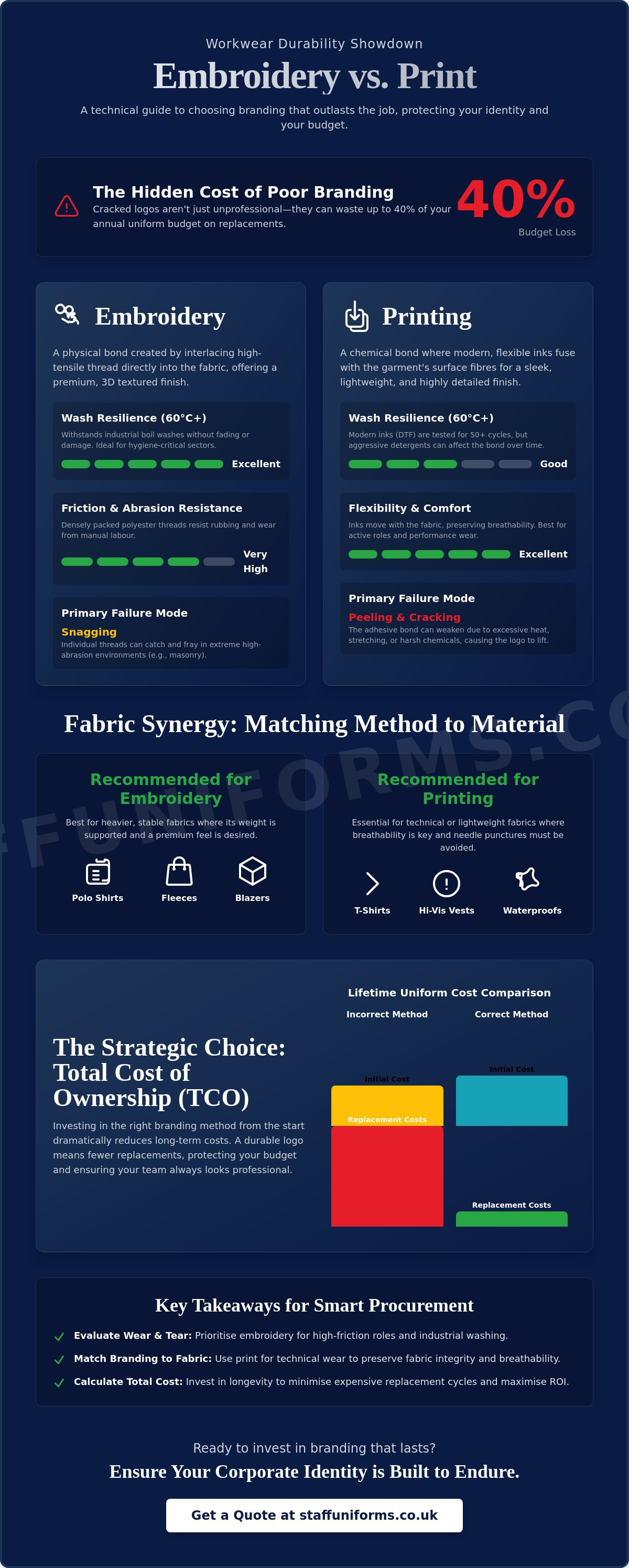
If your team's logos start cracking before their first 90 days on site, you aren't just losing your professional edge; you're throwing away 40% of your annual uniform budget on avoidable replacements. Most procurement managers agree that a uniform is a vital tool for business success, yet many settle for branding that fails under the pressure of a 60-degree industrial wash. Deciding between embroidered vs printed workwear logos durability shouldn't be a guessing game that costs your business hundreds of pounds in unnecessary re-orders.
We understand that your corporate identity is in safe hands only when it can withstand the daily rigours of the UK workplace. You'll discover how to select branding that remains crisp and professional after 50+ intensive wash cycles, ensuring your staff reflect the quality of your service every day. This guide provides a clear, technical breakdown of how thread and ink perform across construction, healthcare, and hospitality sectors to help you secure the best ROI on your branding spend.
Key Takeaways
- Evaluate how different branding mechanics withstand the friction of daily manual labour and industrial wash cycles to protect your corporate identity.
- Master the embroidered vs printed workwear logos durability debate by matching the right technique to your fabric weight, preventing damage to technical materials.
- Determine the most practical solution for your sector, balancing the prestige of embroidery for corporate wear with the safety-critical flexibility of printed PPE.
- Optimise your uniform budget by calculating the Total Cost of Ownership, ensuring you invest in long-term longevity rather than frequent, expensive replacement cycles.
- Enhance staff comfort and morale by choosing branding methods that preserve garment breathability and performance in high-intensity UK work environments.
The Science of Workwear Branding: Embroidery vs. Printing Mechanics
Choosing between embroidery and printing is no longer just a matter of cost. It is a technical decision that directly affects the lifespan of your corporate identity. In 2026, the debate around embroidered vs printed workwear logos durability has shifted because of significant advancements in textile chemistry and machine precision. While embroidery creates a physical bond by interlacing thread with fabric, modern printing uses chemical bonding to fuse designs to the garment surface. Both methods now offer high performance for the UK workforce, but they function in fundamentally different ways.
First impressions depend heavily on texture and finish. An embroidered logo provides a three-dimensional finish that suggests stability and heritage. It is a tactile representation of your brand that commands respect in a boardroom or on a site visit. Conversely, modern digital prints offer a sleek, photographic precision that suits high-tech industries or fast-paced retail environments. The choice often reflects your specific sector's demands; a heavy-duty construction firm needs abrasion resistance, while a promotional event team might prioritise vibrant colour accuracy and lightweight comfort.
How Embroidery Integrates with Fabric
Embroidery begins with digitisation. This process converts your logo into a digital map that tells a high-speed machine exactly where to place each needle drop. The structural integrity of the logo depends on the stitch count. A standard chest logo typically requires between 6,000 and 10,000 stitches to ensure full coverage and prevent the base fabric from showing through. To maintain a crisp finish, we use specialised backing materials to stabilise the garment during the process. This prevents 'puckering', which is a common issue when applying dense designs to lighter fabrics. You can explore various Embroidery techniques to understand how these methods have evolved into the industrial processes used for modern uniforms. This method remains the professional choice for polo shirts, fleeces, and corporate blazers.
Modern Printing Techniques Explained
Printing has evolved far beyond the thick, plastic-like transfers of the past. Screen printing remains a reliable choice for bulk orders on cotton, using a mesh to apply ink layers. However, Direct to Film (DTF) technology has revolutionised the industry by allowing for a 'soft feel' finish that bonds perfectly with synthetic fibres. These modern inks penetrate the weave rather than sitting on top, which significantly improves embroidered vs printed workwear logos durability in high-activity roles. Current ink formulations are tested to withstand 50 or more industrial wash cycles at 60 degrees without cracking or fading. This makes printing the logical solution for t-shirts, hi-vis vests, and waterproof outerwear where needle punctures would compromise the garment's weatherproofing or safety ratings.
Decoding Durability: How Logo Methods Withstand Industrial Use
Industrial environments demand gear that survives more than just a single shift. When evaluating embroidered vs printed workwear logos durability, the core difference lies in how the branding interacts with the fabric. Embroidery becomes part of the garment's structure; printing relies on a surface-level bond. For manual labour involving heavy friction, such as warehouse picking or scaffolding, embroidery typically wins. The polyester threads are densely packed and resistant to the constant rubbing that can cause printed logos to thin or fade.
The 'Peel Factor' remains the primary reason for print failure. This occurs when the adhesive backing of a heat transfer or screen print loses its grip on the textile fibres. It's often triggered by excessive heat or the mechanical stretching of the garment. While modern inks are flexible, they can't match the structural integrity of 4,000+ stitches. However, embroidery has its own limits. In high-abrasion environments, such as stone masonry or heavy metalwork, threads can snag and fray. Choosing the right method requires a balance between the garment's flexibility and the physical hazards of the job site.
Wash Cycle Resilience
Staff uniforms in healthcare and hospitality often undergo "boil washes" at 60°C or 90°C to ensure hygiene. Embroidery handles these high temperatures with ease because the thread dye-lots are designed for industrial laundering. Conversely, biological detergents can be aggressive on printed adhesives. While premium vinyl and screen prints are tested against standardized durability testing methods to ensure they last 50+ washes, cheaper alternatives may crack or flake after just 10 cycles. If your team requires frequent, high-heat cleaning, embroidery offers a more reliable long-term investment.
Environmental Stressors
Outdoor work introduces UV exposure and chemical contact. On fluorescent hi-vis clothing, printed inks can sometimes fade faster than the fabric itself, compromising safety standards. Embroidery uses UV-stabilised threads that maintain colour vibrancy even after months of sun exposure. In healthcare settings, logos frequently encounter cleaning agents and disinfectants. Polyester embroidery threads are naturally more resistant to these chemicals, whereas certain inks may react or dissolve. For heavy-duty items like cargo pants that face constant dirt and grit, the physical lift of embroidery provides a tactile durability that printing cannot replicate, which is why specialized brands like White Wear prioritize robust materials for the specific needs of the painting industry.
Selecting the correct branding method ensures your team stays looking sharp until the garment itself wears out. You can browse our wide selection of customisable workwear solutions to find the best fit for your industry's specific challenges.
Fabric Synergy: Matching Branding Techniques to Garment Materials
Selecting the right customisation method requires a deep understanding of textile science. The 'Weight Rule' is your first technical benchmark. If you apply a dense, 7,000-stitch embroidery to a lightweight 140gsm technical t-shirt, the fabric will pucker and sag under the tension. This imbalance ruins the garment's drape and leads to premature wear around the logo edges. When comparing embroidered vs printed workwear logos durability, the fabric weight often dictates which method will survive the rigours of daily use. For lightweight performance gear, thin film transfers are the logical choice to maintain the garment's integrity.
Breathability is equally critical for active roles. A large, solid screen print acts as a physical barrier to moisture-wicking technology. This creates uncomfortable 'sweat patches' where the ink blocks the fabric's pores. In contrast, embroidery allows some airflow between threads, though it can feel abrasive against bare skin during high-intensity tasks. Garments with more than 3% elastane require specialised high-stretch inks. Standard prints will crack as the fabric expands; however, modern stretch-transfers are designed to recover their shape alongside the fibres. For a complete uniform solution, choosing the right workwear trousers ensures your team stays comfortable from head to toe.
Branding for Healthcare and Beauty
For medical professionals, scrubs uk often utilise high-density embroidery for a look of permanence and authority. A common concern is whether threads trap more bacteria than smooth prints. Research into clinical laundry standards shows that polyester embroidery threads are non-porous and safely withstand 60°C thermal disinfection cycles. On bleach-resistant beauty tunics, embroidery is the gold standard. It resists the chemical degradation that can cause printed logos to fade or peel when exposed to salon-grade cleaning agents.
Outdoor and Industrial Fabrics
Embroidering waterproof jackets presents a unique challenge because every needle penetration creates a potential leak point. In a heavy downpour, water can seep through the logo and soak the wearer's chest. To maintain a 10,000mm hydrostatic head rating, we recommend heat-applied transfers or specialised seal-backed embroidery. For hi vis jackets, heat transfers are the industry standard. They don't compromise the reflective properties or the structural integrity of the safety fabrics. On heavy-duty softshells, these transfers provide a sleek, durable finish that won't fray when caught on industrial equipment. This synergy between fabric and technique is what ensures embroidered vs printed workwear logos durability remains high over the lifespan of the kit.
Performance in the Field: Durability Requirements by Industry Sector
Choosing between branding methods isn't just an aesthetic decision; it's a functional one. Each industry subjects garments to unique mechanical and chemical stresses. In corporate settings, the prestige of embroidery is unmatched for blazers and softshell jackets. It conveys a sense of permanence and authority that aligns with high-end client interactions. However, for the 2.1 million people working in the UK construction sector, the requirements change. Printing is frequently safer for PPE because it maintains the garment's flexibility and doesn't create internal friction points against the skin during heavy manual labour.
Healthcare professionals require uniforms that adhere to strict BS EN standards for hygiene. This involves frequent 60°C thermal disinfection cycles. Embroidery is exceptionally hardy in these conditions, though the backing must be soft enough to prevent skin irritation during 12-hour shifts. The embroidered vs printed workwear logos durability comparison often hinges on these specific maintenance routines. If a logo can't survive the wash, it's a liability to your professional image.
The Hospitality Challenge
Kitchen and front-of-house roles present a dual threat: high heat and organic fats. Many hospitality workwear suppliers suggest using polyester embroidery threads for chef jackets. Unlike rayon, polyester won't lose its colour when exposed to the industrial degreasers used to remove stubborn grease stains. For waist aprons, the choice depends on the task. High-friction areas near pockets benefit from screen printing, which doesn't snag on equipment. In contrast, embroidery on a chef's chest pocket remains the standard for durability against the intense heat of a line-cook station.
The Industrial Standard
On a construction site, branding must never compromise safety. For high-visibility clothing to meet EN ISO 20471 standards, the reflective surface area must remain unobstructed. Large embroidered logos can sometimes reduce this area or pucker the fabric, affecting visibility. Printing is the agile solution here. It's also vital for Flame Retardant (FR) garments. If you choose embroidery for FR gear, the threads must be made from Aramid fibres to ensure they don't melt under heat. This is where the embroidered vs printed workwear logos durability debate becomes a matter of compliance. Site conditions are harsh; a logo must survive tool-belt friction for at least 50 wash cycles to be considered cost-effective.
Ensure your team looks the part with branding that lasts. Contact our experts for a professional workwear consultation.
The Strategic Choice: Calculating Total Cost of Ownership (TCO)
Procurement decisions shouldn't rest solely on the initial invoice. The true cost of a uniform is measured by its lifespan. When assessing embroidered vs printed workwear logos durability, the cheapest upfront option frequently becomes the most expensive over an 18-month cycle. A budget-tier printed shirt might cost £10 but require replacement after 20 washes due to cracking. Conversely, a high-quality garment with professional branding might cost £20 but last for 80 washes or more. In 2026, UK businesses are moving away from disposable workwear to reduce both administrative overhead and textile waste.
A faded or peeling logo does more than look untidy; it erodes brand equity. If your team works in high-end property maintenance or healthcare, a damaged logo suggests a lack of attention to detail. This hidden cost can impact client retention and staff morale. Professional uniforms act as a visual promise of quality. When that visual fails, the brand promise feels hollow.
ROI of Professional Embroidery
Embroidery offers an exceptional "pence-per-wear" valuation. For permanent staff, the 3D texture of stitching provides a level of prestige that flat print cannot replicate. It adds significant perceived value to custom staff uniforms uk, making the garment feel like a piece of professional equipment rather than a temporary t-shirt. For employees with a tenure of two years or more, the investment in high-end stitching ensures the branding remains intact for the entire life of the fabric. It's the standard choice for polo shirts, softshell jackets, and knitwear where longevity is the primary KPI.
When Printing Wins on Value
Printing remains the dominant financial choice for high-volume requirements and seasonal roles. If you're hiring 500 temporary staff for a three-month summer contract, the durability of embroidery is surplus to requirements. Modern DTF (Direct to Film) transfers and screen printing are ideal for large-format branding, such as "SECURITY" or "STAFF" across the back of a hi-vis jacket. These larger designs would be heavy and restrictive if embroidered. To ensure the embroidered vs printed workwear logos durability meets your specific needs, always request a sample wash-test. Subject the sample to a 60-degree industrial cycle before committing to a national rollout to verify the bond strength.
The 2026 Procurement Decision Matrix
- Choose Embroidery if: The role is permanent, the garment is a polo or jacket, and you require a premium B2B brand image.
- Choose Printing if: The logo is larger than 15cm, the staff are seasonal, or the garment is lightweight (under 160gsm).
- Replacement Target: Aim for a minimum of 50 industrial washes without visible degradation of the corporate identity.
By focusing on the total cost of ownership rather than the unit price, UK managers can build a more sustainable and professional workforce appearance. Your uniform is a tool. Select the branding method that ensures that tool stays sharp for as long as the job requires.
Future-Proof Your Corporate Identity
Choosing the right branding method is a strategic investment in your company's professional image. Heavy-duty embroidery offers superior resistance to 60-degree industrial washes. Modern high-performance printing provides the flexibility needed for technical, moisture-wicking fabrics. Industry data from 2024 suggests that mismatched branding methods can increase garment replacement frequency by 40% within the first year. Your final decision on embroidered vs printed workwear logos durability must balance the textile's weight with the specific physical demands of your sector.
Since 2017, The Staff Uniform Company has served as a specialist UK supplier for the healthcare, hospitality, and industrial sectors. We provide precision embroidery and high-performance printing services designed to lower your total cost of ownership. It's about more than just a logo; it's about equipping your team with tools that last as long as their hard work does. Our experts ensure your brand remains clear and professional through every shift.
Build your durable team uniform with The Staff Uniform Company and give your staff the quality they deserve.
Frequently Asked Questions
Is embroidery more durable than printing for workwear?
Yes, embroidery offers superior longevity because the design is stitched directly into the garment fibers. It withstands high-temperature industrial washes up to 60°C without losing its structural integrity. For heavy-duty industries like construction, embroidered logos remain legible and intact for the entire 24-month lifespan of a standard poly-cotton polo shirt.
Do printed logos peel off after many washes?
Modern industrial heat transfers rarely peel if they're applied at the correct pressure and 160°C temperature. However, budget vinyl prints often crack or lift after 25 to 30 wash cycles. We use industrial-grade inks that bond with the fabric, preventing the common peeling issues associated with low-cost retail alternatives.
Which is better for hi-vis jackets: print or embroidery?
Printing is the preferred choice for hi-vis waterproof jackets to maintain the garment's EN ISO 20471 safety certification. Embroidery needles puncture the waterproof membrane, which leads to water ingress during heavy rain. A heat-sealed reflective print ensures the jacket remains 100% waterproof while keeping your team visible and dry on-site.
Can you embroider any type of workwear fabric?
Most heavy-duty fabrics like cotton, poly-cotton blends, and fleece are ideal for embroidery. However, very lightweight materials under 130gsm often pucker under the tension of a 5,000-stitch logo. We recommend printing for ultra-thin performance tees or waterproof shells to preserve the fabric's technical properties and ensure a professional finish.
How many washes should a printed workwear logo last?
A professionally applied screen print or high-quality transfer should last for at least 50 washes. This typically covers the standard 12-month lifecycle of a staff uniform when laundered once per week. Following the 40°C wash guidelines and avoiding industrial tumble dryers can extend this lifespan by an additional 15 to 20 cycles.
Is embroidery more expensive than printing in the long run?
Embroidery is often more cost-effective over a 2-year period because it rarely needs replacing before the garment wears out. While the initial setup fee for digitising a logo might cost between £15 and £25, the resilience of the finish reduces replacement costs. When comparing embroidered vs printed workwear logos durability, embroidery typically reduces re-ordering frequency by 30%.
What is the best logo method for healthcare scrubs?
Embroidery is the industry standard for healthcare scrubs because it withstands 60°C infection control washes without fading. It maintains a crisp, professional appearance even after 100 cycles in industrial laundries. This ensures your medical staff look trustworthy and identifiable, which is vital for maintaining patient confidence in clinical environments.
How do I prevent my workwear logos from fading?
Wash your garments inside out at 30°C or 40°C to protect the logo from abrasive contact with the washing machine drum. Avoid using biological detergents containing bleach, as these chemicals strip the colour from both thread and ink. Air drying instead of using a tumble dryer can increase the vibrancy of your embroidered vs printed workwear logos durability by up to 40%.